
UVM leader presents strategic plan, asks state for funding to support students, cancer care and a multipurpose center
Get AI-powered insights, summaries, and transcripts
Sign Up Free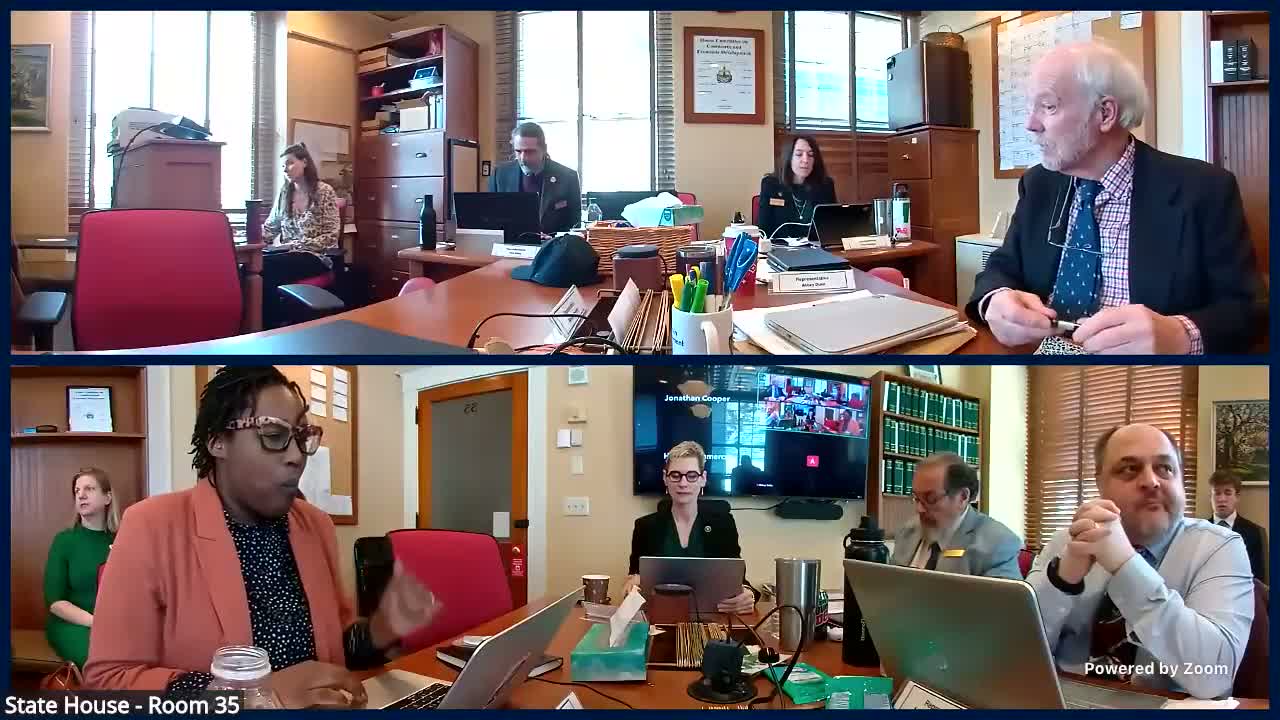
Summary
Dr. Marlene Trapp told the House Commerce & Economic Development Committee that UVM will seek a 3% inflationary increase to maintain need-based aid, $1 million a year for five years for rural cancer-care expansion, and $15 million toward a multipurpose center while highlighting research gains and housing challenges.
Dr. Marlene Trapp, speaking to the House Commerce and Economic Development Committee on Feb. 4, outlined a strategic plan for the University of Vermont that emphasizes serving the state, expanding research and workforce pipelines, and securing state and philanthropic support for student aid, health care and a proposed multipurpose center.
Trapp told lawmakers that "we have nearly 4,000 Vermont students; 32% of those students are Pell eligible," and said 18% of Vermont students are first-generation college students. She said roughly 48% of students attend tuition-free because of direct university support and that more than half of the state appropriation goes to Vermont students.
The university leader also stressed UVM's research profile and economic role. "We have recently achieved R1 designation," Trapp said, citing the Carnegie classification for top-tier research universities. She described an all-electric research vessel on Lake Champlain and said the university attracted sizable extramural research funding in the last year. Trapp highlighted applied projects including an active program to develop a vaccine for tick-borne illnesses led by the same principal investigator who worked on an RSV vaccine.
On economic development, Trapp noted that the university has engaged on tech-hub work tied to semiconductor manufacturing. She said UVM received a roughly $3.4 million award for a tech hub that originated from this committee and described an earlier federal award and a resubmitted federal proposal tied to CHIPS-era funding that could bring "tens of millions" to the state if finalized.
Budget requests in the governor's proposal that Trapp spelled out include a 3% inflationary increase to the general fund to sustain need-based funding and tuition discounting for Vermont students, a request for $1,000,000 per year for five years to support the UVM Cancer Center's rural-care expansion, and $15,000,000 in support for a multipurpose center the university hopes will be largely philanthropically funded.
Trapp recounted the project's history: the multipurpose center was approved by UVM's board in 2019 with an initial estimate of about $100 million; construction paused during the pandemic and about $70 million had been expended before the halt. She said cost escalation created a larger shortfall and that current donor commitments plus a potential state appropriation could reduce the gap to roughly $55 million. Trapp named a pending bequest from the Tarrant family and a matching pledge from Chuck Davis as examples of philanthropic interest.
During questions, committee members pressed Trapp on whether donor support was intended to cover capital only or operating costs; she said her hope is that donors fund the build-out so the university's bonding capacity for academic buildings is preserved. She also acknowledged the state's housing shortage as a major retention challenge and described tactics the strategic plan will include to improve student retention and to partner with other state colleges and municipalities to relieve housing pressure.
Trapp said the strategic plan would be voted on by UVM's board later that week and emphasized that the university's approach will be metrics-driven, with outreach and community listening sessions informing implementation. No committee votes were taken during the session. The committee said it will continue budget discussions and invited additional follow-up on specific items.