Get Full Government Meeting Transcripts, Videos, & Alerts Forever!
Get email alerts on the Artificial Turf topic
No spam. Unsubscribe anytime.
Board approves after‑the‑fact artificial‑turf waivers and open‑space variances for Magnolia Place duplexes
Summary
The Historic Preservation Board approved Certificates of Appropriateness, waivers and variances for five Magnolia Place duplex lots that installed artificial turf around pool areas in lieu of permitted sod; staff found turf met many technical percolation criteria but open‑space reductions required board action.
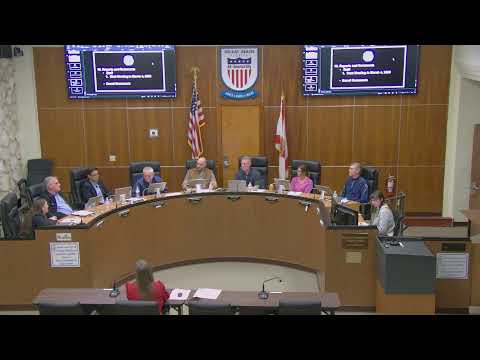
The Delray Beach Historic Preservation Board on Feb. 4 approved five separate after‑the‑fact Certificates of Appropriateness, waivers and variances for Magnolia Place—five duplex lots in the Old School Square Historic District—after artificial turf was installed where sod had been permitted.
The architect, Gary Iliopoulos (GE Architecture), and owner representative Tom Ladany (Seaside Builders) told the board the project is near completion and the turf was installed in confined areas around small pools where sod was difficult to maintain. Iliopoulos said the turf installation was designed to be highly pervious (installed over sand and rock) and that the product supplied warranties beyond the city’s eight‑year minimum.
Staff reported it conducted a site visit and found the installed turf met many of the technical requirements in the LDRs (percolation/drainage, base material and appearance), but emphasized that by code artificial turf does not count toward the city’s 25% minimum open space. Because turf was installed where sod had been approved, the applicants filed waivers and variances to reduce required open space (lot‑by‑lot reductions ranging down to 9.3% on Lot 1 as presented in staff slides).
Public comment included Roger Cope (Cope Architects Inc.), who supported the waivers and variances and described turf as low‑maintenance and highly permeable in modern installations. Owner Tom Ladany said the turf installation was not malicious or an attempt to avoid process; he said the deficiency was identified during the CO/TCO inspections and the project came to the board to regularize the installation.
Board members discussed visibility (much of the turf is internal and not readily seen from the public right of way), percolation test results provided by the applicant (staff said those technical aspects were met for these installations), long‑term disposal and warranty concerns, and the visual‑compatibility standards that guide decisions in historic districts. Several board members voiced caution about setting a precedent for front‑yard turf in contributing historic settings, but most said the site’s urban context and limited visibility made the approvals reasonable here.
The board made five separate motions—one for each lot, as required—and approved each motion on roll call. In each vote six members voted yes and John Miller voted no. Staff noted the approvals are specific to these lots and emphasized that similar requests could be treated differently depending on visibility, context, and whether turf emulation and percolation meet LDR standards.
The approvals permit the installed artificial turf to remain under the recorded variances and waivers; staff reiterated that artificial turf does not count toward required open space and that the city will record the variance documents as part of the permitting and CO process.