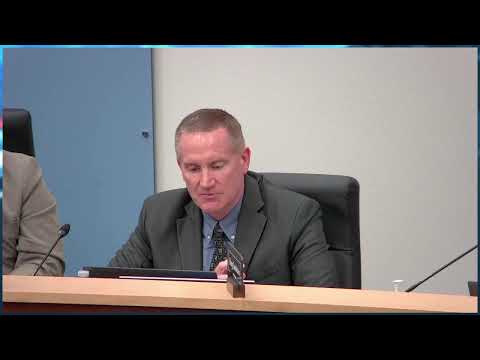
Buckeye holds public hearing as city moves to receive CDBG funds directly
Loading...
Summary
Council heard a presentation on Buckeye's transition to an entitlement Community Development Block Grant (CDBG) recipient, a steering committee process to produce a five‑year consolidated plan, and public outreach results including 158 survey responses; one resident urged nonprofit inclusion in planning.
Buckeye city staff told the City Council on Feb. 3 that the city has qualified to receive Community Development Block Grant funds directly from the U.S. Department of Housing and Urban Development and will begin work on a five‑year consolidated plan.
Rob, the staff presenter, said Buckeye previously participated in a county urban group that awarded about $1.2 million over several years (an average of roughly $250,000 a year). "Now we are big enough to become an entitlement city," Rob said, adding that a HUD representative estimated the city could receive about $500,000 a year directly, "so you can see that we have an opportunity here to double the amount of money we've been averaging up to this point in time." The council opened a public hearing to receive comment and to inform development of the required consolidated plan and one‑year action plan.
City staff said they selected Root Policy (Root Policy Research) to help prepare the consolidated plan and have formed a steering committee that will include two council members and representatives from grants, public works, police, community services and development services. Staff described outreach that began in September and included surveys and virtual meetings; staff reported receiving 158 survey responses during the outreach period. Staff noted statutory eligibility limits that require projects to serve low‑ and moderate‑income areas and reminded council members that certain activities (for example, public services) have program limits.
Frankie Lewinson of Root Policy Research explained technical options, including the use of a Section 108 loan for large projects and cautioned that HUD disfavors some "stacking" of funds but that specific uses should be discussed with the city's HUD representative. Lewinson said one constraint is that generally no more than 15% of entitlement funds can be used for direct public services in a given year.
One public speaker, Kimberly Schwartzenberg, identified herself as a community liaison and urged the city and the steering committee to actively engage local nonprofits and to include them in outreach and steering‑committee discussions so service providers can contribute local knowledge about needs.
The council closed the hearing after accepting public comment. Staff said the city will continue outreach through March, issue a draft plan for later public comment in the spring, and aim to complete and present a consolidated plan for council review by mid‑May.