Get Full Government Meeting Transcripts, Videos, & Alerts Forever!
Get email alerts on the City Budget topic
No spam. Unsubscribe anytime.
Sioux Falls advances 2026 appropriations amid warnings that state property‑tax changes force cuts
Summary
City finance director said state tax reform (SB 216) creates a permanent revenue loss and the proposed 2026 budget includes internal reductions to close most of an $8–$10 million ongoing gap; council moved the appropriations ordinance to a second reading for detailed amendments, voting 8–0.
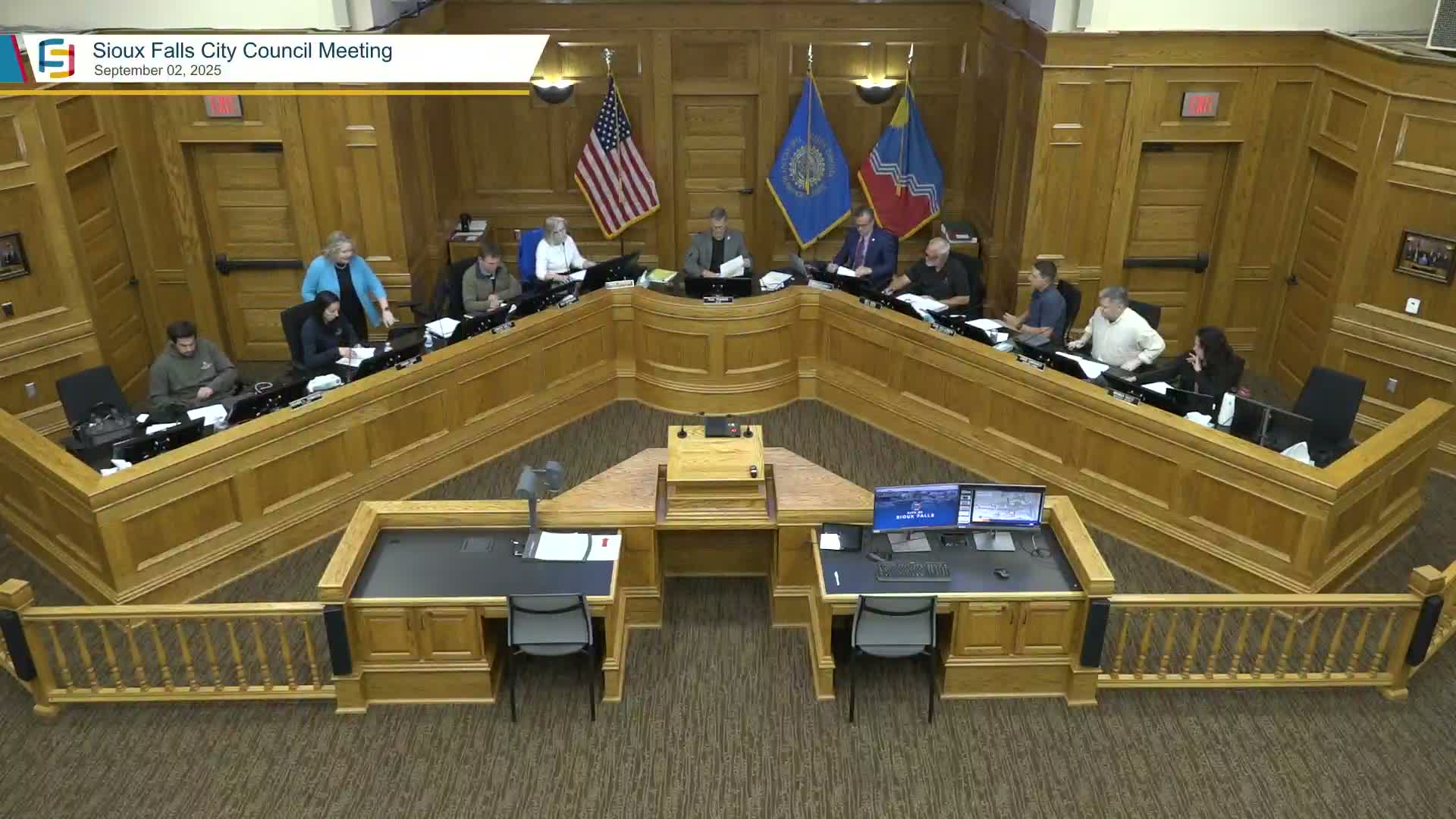
The Sioux Falls City Council advanced the mayor’s 2026 appropriations ordinance to a second reading after a wide‑ranging presentation by Director of Finance Sean Pritchett and public comment on Sept. 2.
Pritchett said state legislation (SB 216) will produce a permanent reduction to municipal property tax revenue and described the city’s response: eliminate $8–$10 million in ongoing operating expenses, eliminate eight positions, cut projected FTE growth by 50% (about 50 positions over 10 years in non‑public‑safety areas), reduce part‑time staffing, curtail travel and training and assess software usage to lower recurring costs. He called the 2026 proposed budget a first step and warned additional recalibration will be necessary in 2027–28.
Pritchett framed the choices: use one‑time reserves to plug the gap temporarily or adjust ongoing spending now to avoid deeper, later cuts to services. He urged the council to consider internal reductions and service redesign before broad fee increases that would affect residents.
At the public hearing and during general input several residents raised concerns that downtown projects had been prioritized over neighborhood services and questioned the equity of budget choices, with speakers pointing to local needs including street maintenance, pools and snow removal. One speaker urged the council to consider alternatives to the current property‑tax model, including a mix of land‑value taxation or service‑cost assessments.
Councilors debated priorities and emphasized the need for further work before final adoption. Several members encouraged frank discussion of alternatives during the next week’s amendment process. The council unanimously voted to send the Appropriations Ordinance to second reading on Sept. 9, 2025 (8–0).
Next steps: council will take up detailed amendments and second‑reading action next Tuesday; staff will present additional information to quantify impacts and recommended tradeoffs.