
House approves $1.5 billion transportation bond package after debate over fees and timing
Get AI-powered insights, summaries, and transcripts
Subscribe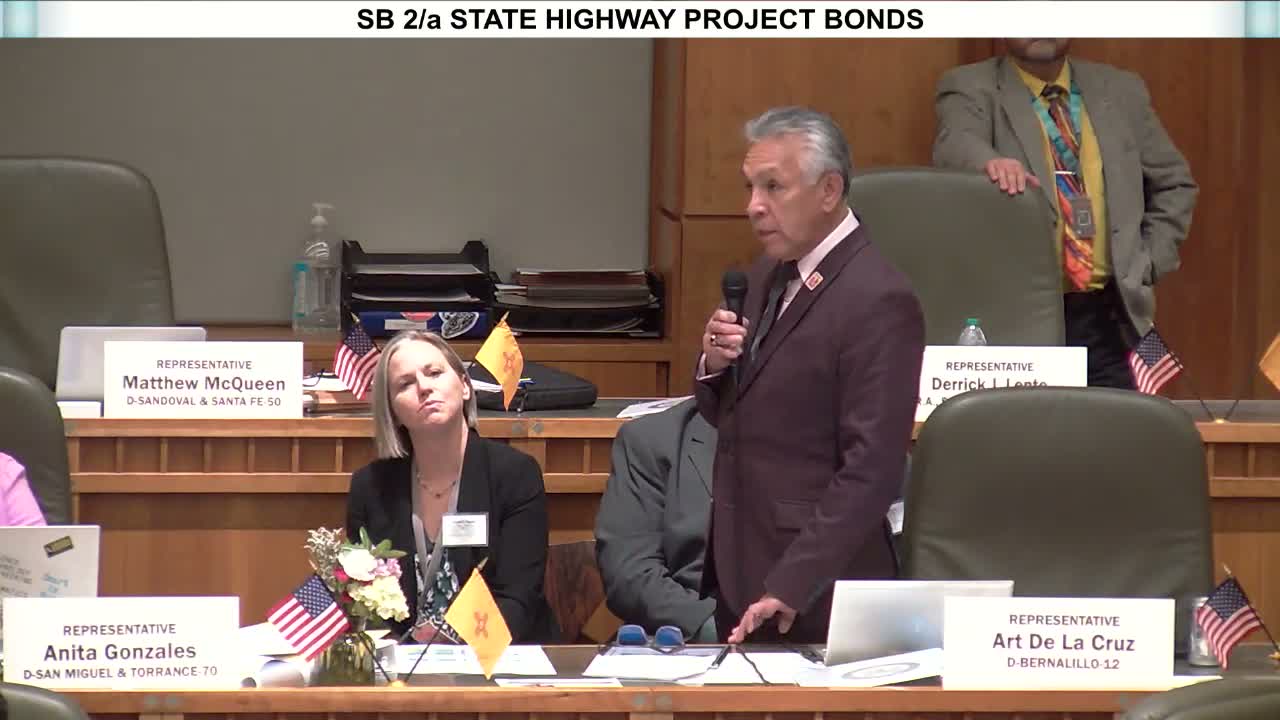
Summary
The House voted to pass Senate Bill 2, authorizing up to $1.5 billion in revenue bonds for road and bridge projects and changing vehicle registration and weight‑distance fee schedules to support the debt. Members debated fee impacts on families, small trucking firms, and rural project timing; a floor substitute to retarget existing motor‑vehicle excise tax was tabled.
The New Mexico House passed Senate Bill 2 on Feb. 3, authorizing up to $1.5 billion in revenue bonds intended to accelerate repair and construction of roads and bridges statewide. Sponsors say the package is designed to close a multibillion‑dollar maintenance gap and provide stable multi‑year work for contractors; critics said it raises burdensome fees and risks placing the cost on families and small businesses while the state holds a large budget surplus.
Key elements: the bill, as explained on the floor, would authorize the Transportation Commission to issue up to $1.5 billion in revenue bonds while keeping a principal limit on outstanding debt. The bill updates revenue streams to support bond payments by increasing vehicle registration fees (a one‑time 25% increase in the bills discussed on the floor) and the weight‑distance tax (proposed 35% increase), and establishing a phased fee schedule for electric and plug‑in hybrid vehicles. Sponsors estimated the package would generate tens of millions in new transportation revenue as fees phase in.
Floor substitute: during debate a substitute was offered that removed the new fees and instead redirected a larger share of the existing motor‑vehicle excise tax (MVET) toward roads (raising the state road fund share from current levels). The substitute would have avoided new fee increases on registration and weight‑distance taxes and phased out an EV surcharge. The substitute’s proponents argued it put existing revenues where constituents expect them to go; opponents argued it would reduce general‑fund resources already allocated in this year’s budget. The House voted to table the substitute (42‑26) and proceeded with the underlying bill.
Rural and equity concerns: representatives from rural districts cautioned that raising the weight‑distance tax and registration fees would increase costs for local trucking firms and fleets and could be passed on to consumers, particularly in construction and supply chains. Several members noted that most projects in the first bond tranche are later‑stage multi‑year lettings (many not scheduled until 2029–2033 on the public letting schedule), which they said could delay visible benefits to constituents who will pay higher fees now.
Supporters’ case: supporters, including the bill sponsor, said the bond authority creates predictable funding to tackle a large backlog; DOT testified projects are based on the State Transportation Improvement Program (STIP) and that annual bonding would be limited (the bill limits average annual bonding to about $290 million). They also noted New Mexico’s strong bond rating, which lowers interest costs.
Outcome and next steps: House passage (roll‑call 44‑23) sends SB2 to the Senate. DOT officials were directed to provide detailed project lists and bonding plans; bond sales and project letting schedules will follow usual procurement processes. The debate left open questions about fee incidence, rural distribution of projects, and timing of construction versus when taxpayers begin paying increased fees.
Sources: Floor debate and votes on Feb. 3; sponsor and committee discussion of fee projections and bond limits.