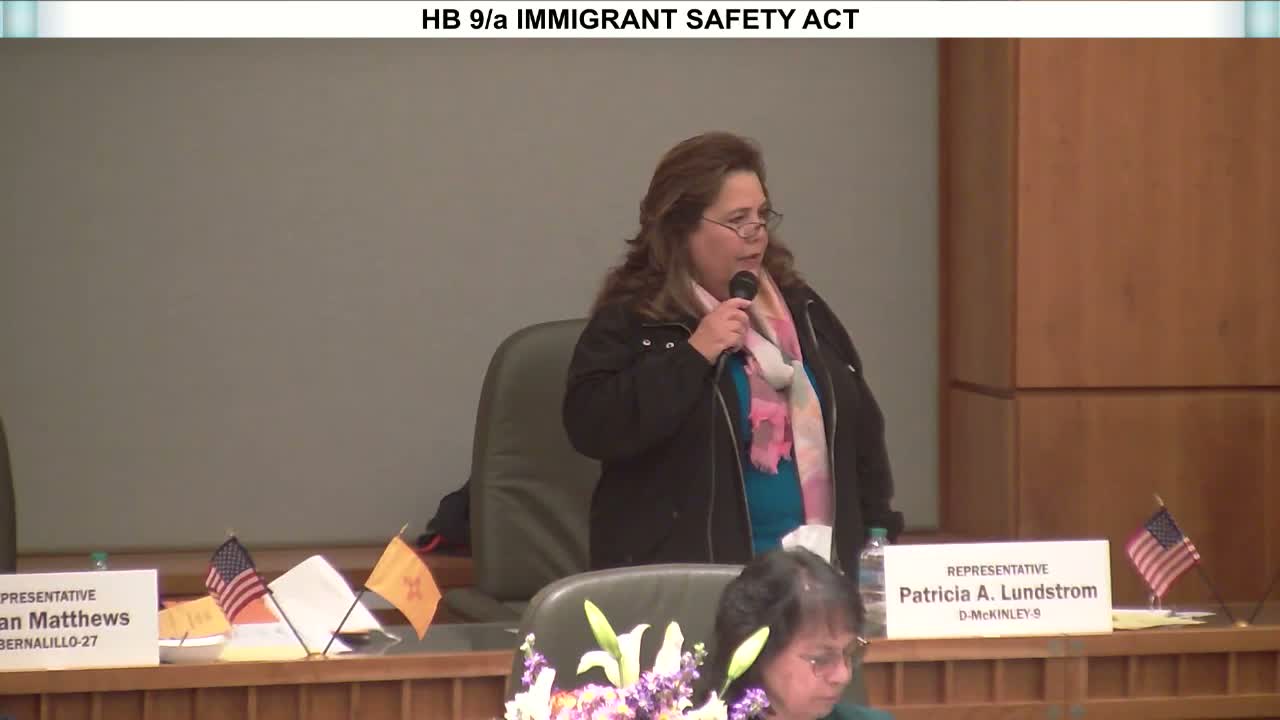
House passes bill blocking state, local contracts that detain immigrants after heated debate over county impacts
Loading...
Summary
The New Mexico House on Feb. 3 passed House Bill 9 as amended, which bars public bodies from entering or renewing agreements to detain people for federal civil immigration enforcement. Sponsors framed the measure as a human‑rights stand; rural lawmakers warned it could cost counties millions in gross‑receipts and jobs and pressed (unsuccessfully) for a state hold‑harmless fund.
House Bill 9, a measure that would bar state and local governments from entering into agreements to detain people for federal civil immigration enforcement, passed the New Mexico House on Feb. 3 after more than six hours of floor debate.
Supporters, led on the floor by the bill sponsor, argued the law will prevent continued detention of people in facilities they described as having documented health and safety failures. "An economy built on cages is not development," the sponsor said, framing the vote as a matter of public values and human rights. Proponents repeatedly described the bill as focused on civil immigration detention and not on criminal custody overseen by the U.S. Marshals Service.
Opponents — including several rural lawmakers who represent counties that host detention centers — challenged that description and pressed the sponsors for economic data. Representative Patricia Lundstrom said she opposes the reported conduct of some federal enforcement actions but raised what she called “economic justice” concerns for counties that receive significant gross‑receipts tax (GRT) revenue from detention facilities. She cited committee testimony and earlier briefings that put annual local revenue losses in the millions, and asked repeatedly for details on how many jobs and how much GRT would be affected. One sponsor and committee witnesses gave facility employment figures (the floor debate recorded a cited figure of about 180 jobs tied to a facility in Cibola County) and mentioned an appropriation the House was considering for workforce and rural economic development (members disputed whether the amount was $6 million or $9 million).
Lawmakers also debated whether the bill would force closures or simply end state and county contracting for civil‑immigration beds. Sponsors said the statute would withdraw state and subdivision participation in these contracts and empower the state to require better oversight and limits on civil detention in New Mexico. Opponents warned the bill could prompt private contractors to leave and said that if beds move out of state detainees could be deported or transferred far from families. Questions about the federal statutes that distinguish civil immigration custody from criminal custody circulated through the floor debate; members referenced federal code sections including 8 U.S.C. §1325 and 8 U.S.C. §1357 in discussion of civil detention authority.
A major floor amendment (House floor amendment #1) proposed by members representing affected counties would have required the state to reimburse counties for provable losses from any closed facility — including lost leased‑facility income, lost GRT over a five‑year average and increased county spending attributable to job losses. That amendment was debated at length and then tabled by roll‑call, 37‑32. Supporters of the amendment argued it was a necessary "hold‑harmless" measure for rural economies; opponents said it was unnecessary or would overcompensate counties and could create large, indefinite recurring general‑fund obligations.
After the amendment was tabled, the bill sponsor closed debate by urging members to vote on principle and said the measure reflects a long campaign to prevent what she described as human‑rights abuses in civil immigration detention. The House recorded final passage of House Bill 9 as amended by a roll‑call vote of 40 in favor and 29 opposed.
What happens next: House passage sends the bill to the Senate for consideration (and possible conference or amendment). Implementation questions remain, including whether counties will be able to repurpose facilities, how contract terminations will be handled, and how the federal government might react. Rural lawmakers vowed to continue pushing for economic relief or transition assistance through the budget process.
Sources: Floor debate and roll‑call votes during the House session on Feb. 3; bill sponsors and opponents speaking on the record on the House floor.