Lifetime Citizen Portal Access — AI Briefings, Alerts & Unlimited Follows
State Water Board hears winter hydrology briefing; snowpack well below average, CalWaters reporting ramps up
Loading...
Summary
The board received a statewide hydrology update noting near‑term dryness and a substantial snowpack deficit (about 36% of April 1 average) and an operational briefing on CalWaters reporting with fast adoption but an approaching March 2 filing window for late filers.
The State Water Resources Control Board was told Tuesday that California’s reservoirs remain mostly at or above average for this time of year but that snowpack—critical for summer runoff—is far below normal. Deputy director Eric Ekdahl said statewide snowpack measures are roughly 36% of the state’s April 1 average, and that warm, dry weather in recent weeks has limited new accumulation.
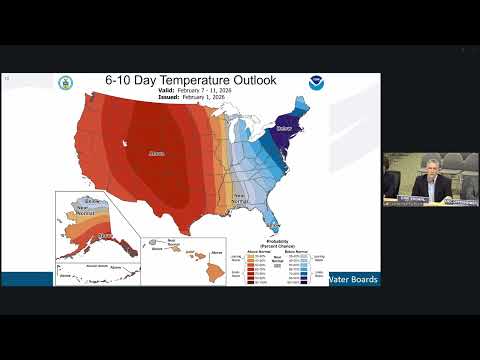
Ekdahl said precipitation totals so far keep much of the state near 100% of average, but the lack of snow means runoff and reservoir refill this spring are uncertain. He noted forecasts show only light systems over the next two weeks, mostly north of Sacramento, and that temperatures in many areas have been well above typical winter values.
The board also received an update on CalWaters, the State Water Board’s new online water‑use reporting portal. Ekdahl reported that as of the Jan. 31 reporting deadline the portal had registered about 7,500 users and that roughly 18,500 reports had been submitted. Staff said the system is onboarding roughly 800 new users per day, and that post‑14 appropriative rights holders may file through March 2, 2026 without financial penalty; staff estimated late‑fee assessments could total about $800,000 for noncompliant accounts under the current fee regime.
Board members praised staff’s rapid response to user support needs and asked for additional ecological metrics in future hydrology briefings—requests Ekdahl agreed to pursue. Chair Joaquin Esquivel and others asked staff to include measures such as percent unimpaired flow or clearer indicators of in‑stream ecological conditions to complement reservoir and precipitation statistics.
The briefing made clear that while surface storage is in relatively good shape due to earlier storms, the low snowpack heightens uncertainty for runoff and water supply later this year, and staff said they will continue to monitor storms through February and March and provide updates to the board.