Get Full Government Meeting Transcripts, Videos, & Alerts Forever!
Get email alerts on the Economic Development topic
No spam. Unsubscribe anytime.
Franklin County authorizes up to $33 million in industrial bonds for downtown hotel renovation
Summary
The Franklin County Fiscal Court approved a resolution to issue taxable industrial revenue bonds not to exceed $33 million to finance the acquisition and renovation of a downtown Frankfort hotel; county officials and the developer described the project scope and safeguards intended to keep county liability off the books.
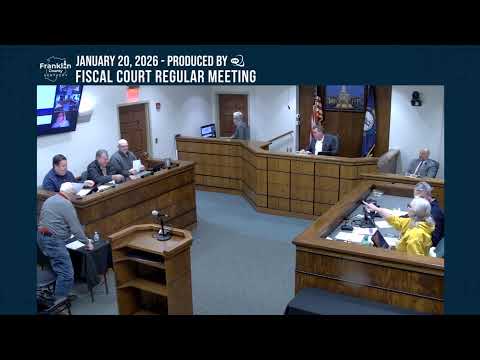
Frankfort — Franklin County fiscal court approved a resolution authorizing taxable industrial revenue bonds of up to $33,000,000 to finance acquisition, renovation and equipping of a downtown hotel and related agreements, the court announced Jan. 20.
County and developer representatives told the court the bonds would be privately negotiated and payable solely from project revenues, citing KRS 103.230(2). "The county has no financial obligation whatsoever, with respect to the issuance of a bond," said Gil during the presentation on the legal framework. Developers said the financing is necessary for the project to proceed and described a substantial renovation of the existing building.
Why it matters: Court members said an upgraded hotel would add downtown lodging capacity and meeting space — potentially attracting conferences and visitors — while developers said the capital stack includes federal and state historic incentives and other funding that make the project viable. The draft presented to the court projects roughly $33 million in renovation work and an initial hotel inventory of about 163 rooms, plus expanded ballroom and meeting space.
How the deal works: Counsel explained the bonds are structured as an incentive tool: bondholders will be paid from lease revenues tied to the property, and the county’s constitutionally defined debt limit is not affected. When asked who would be liable for a default, counsel reiterated the risk rests with the owner or the bank; the county would not be on the hook. The presentation referenced a draw-based payment arrangement with the project lender and noted oversight and disbursement controls reside with the bank and private contract terms.
Questions from the court focused on scope and oversight. Members asked about: verification of draws, the property perimeter included in the bond, whether tax revenues (transient room tax) would change, and the requirement that the school board and city sign off before the project proceeds to the Department for Local Government. The developer said renovations will include roofing, windows, complete room reconfigurations, a new restaurant and expanded meeting facilities, and projected a 2027 re-opening timetable if work proceeds on schedule.
Vote and next steps: After discussion the court voted to approve the resolution authorizing issuance of the bonds and related documents, including a lease agreement and a payment-in-lieu-of-taxes (PILOT) framework. The developer and city and school board must complete their separate approvals and the bond purchaser must finalize financing. The court’s authorization does not obligate county tax dollars and requires the project to proceed to close for bonds to be issued.