
Bill to protect nonprofit affordable-homeownership projects from losing property-tax exemptions clears public hearing
Get AI-powered insights, summaries, and transcripts
Sign Up Free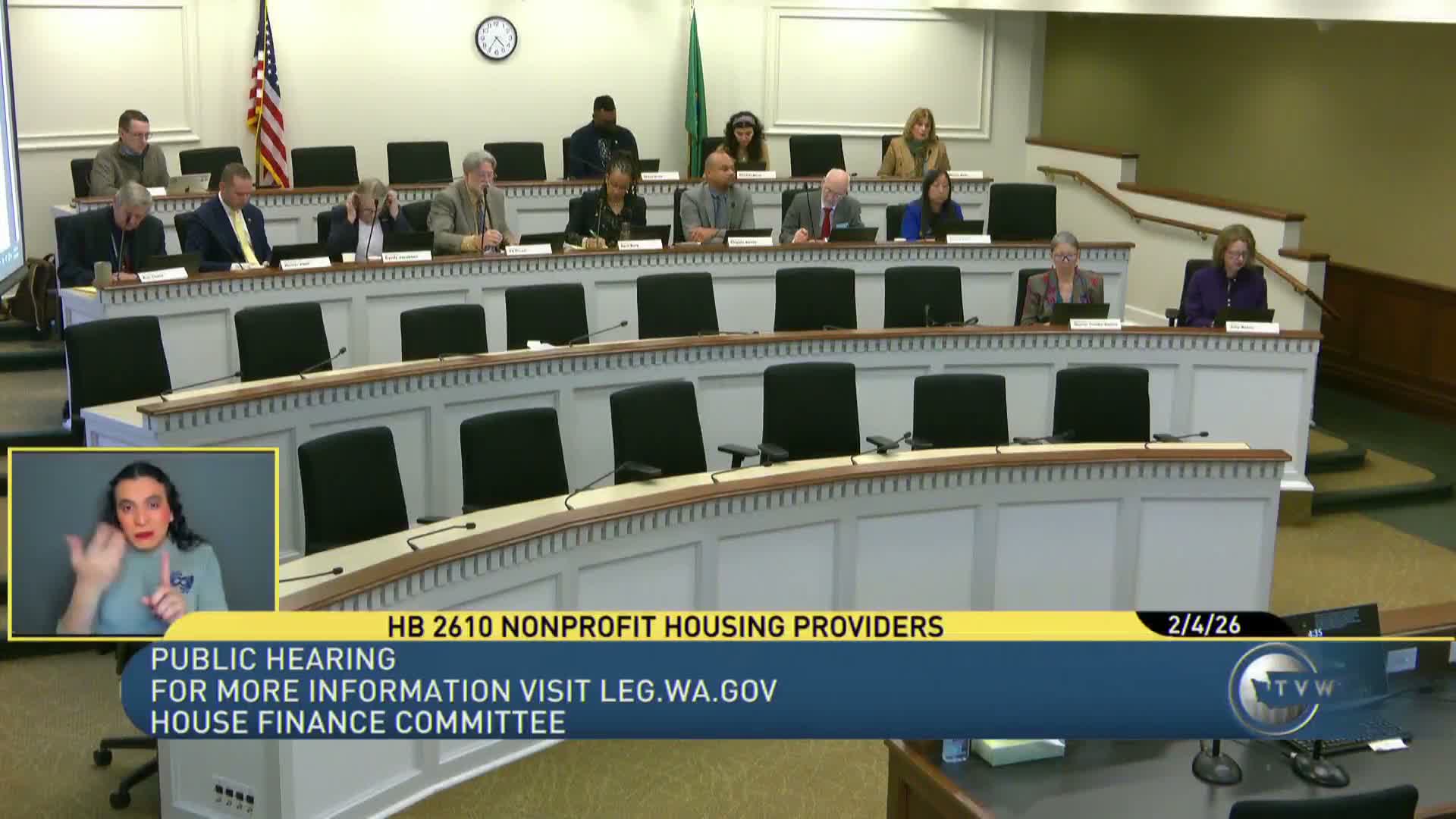
Summary
House Bill 2610 would allow nonprofit organizations developing homeownership projects to rent or loan property for qualifying nonprofit activities during predevelopment without losing a property-tax exemption; testimony from land trusts, interlocal housing partnerships and nonprofit developers supported the change as protecting stewardship and reducing development costs.
House Finance heard House Bill 2610, which clarifies the nonprofit homeownership property-tax exemption to allow interim uses by qualifying nonprofit organizations without forfeiting the exemption. Serena Dolly summarized the existing exemption: property owned by nonprofits for developing housing to be sold to low-income households is generally exempt from state and local property tax but the exemption typically expires after seven years or upon lease or transfer unless an extension is granted. HB 2610 would allow a property receiving the nonprofit homeownership exemption to be rented or loaned to another organization for qualifying activity if reasonable rents/donations do not exceed maintenance and operation costs and interim uses do not exceed specified thresholds, and it would prevent loss of exemption for transfers between nonprofit entities granted exemptions for different uses.
Representative Street, the sponsor, said the bill treats nonprofit affordable-housing developers like other charities and provides flexibility during the many-year predevelopment period. Jason Gauthier (South Sound Housing Affordability Partners) and Kathleen Hasbald (CEO, Homestead Community Land Trust) testified in support; Hasbald described a Tacoma site (1105 MLK) that Homestead expected to qualify for an exemption but was disqualified after activating temporary arts uses, increasing holding costs and development complexity. Jim Chambers (WELD) described similar operational needs for mission-driven organizations and supported the bill as striking a balance between accountability and practical predevelopment stewardship.
The committee closed the public hearing on HB 2610 and placed the bill on the committee schedule; sponsors and witnesses urged due consideration of implementation language to avoid unintended disqualification of mission-aligned interim uses.