Lawmakers debate embodied-carbon rules for large buildings in HB 2273
Loading...
Summary
A committee hearing on HB 2273 asked the State Building Code Council to set embodied-carbon reduction standards for large projects, requiring data reporting and a Commerce-run public database; witnesses split between industry concerns about supply and cost and community and design professionals arguing the bill advances environmental justice and meets international precedents.
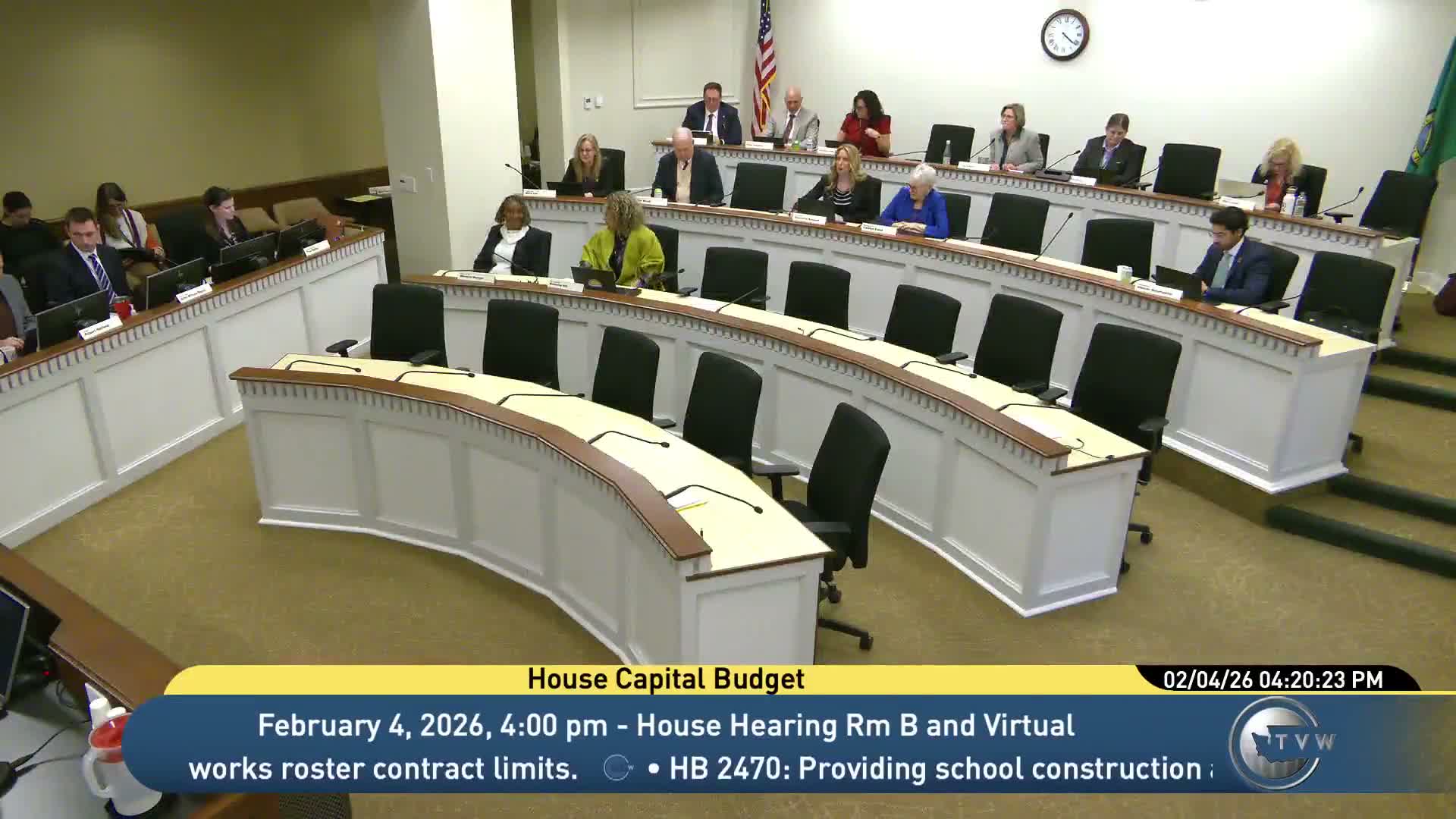
The Capital Budget Committee heard staff and sponsor briefings on House Bill 2273, which would direct the State Building Code Council to adopt embodied-carbon reduction standards for buildings and construction materials. Staff told members the standards would apply to new construction, additions and renovations of 100,000 square feet or larger (school district construction is excluded), require projects to meet a 30% reduction in embodied carbon from a static baseline for the 2030 code, establish a Commerce-hosted public database for design professionals to submit embodied-carbon data, and require random audits of 3% of projects with periodic reporting beginning Dec. 31, 2028. Fiscal impacts cited in the briefing included modest capital and operating costs for Commerce and Enterprise Services and an indeterminate nonzero cost for the University of Washington tied to capital-project impacts.
Sponsor Representative Durer framed embodied carbon as the upstream emissions embedded in materials and construction and said the bill responds to the State Building Code Council’s request for legislative guidance. He said allowing embodied-carbon savings to count as a trade-off with energy-code performance could lower costs and spur innovation in Washington products.
Public testimony split along industry and community lines. Corey Shaw, Executive Director of the Washington Aggregate and Concrete Association, testified in opposition, warning that a "blanket 30%" requirement could create sourcing challenges for supplementally cementitious materials, cause curing-time constraints, bottlenecks and project delays, and raise material costs if the requirement applied uniformly across projects. Shaw said his association is participating in Commerce workgroups and offered technical amendments and training resources.
By contrast, Alexandra Johnson of the Duwamish River Community Coalition urged support on environmental-justice grounds, linking embodied-carbon reductions to reduced local air pollution and health disparities and citing an estimate that embodied-carbon reductions of up to 46% are achievable at very low cost. Architect Chell Anderson also supported the bill, saying many firms already perform embodied-carbon analysis and that data collection and consistent requirements would help mainstream low-carbon construction practices. Opponent Jeff Pack (Washington Citizens Against Unfair Taxes) urged rejection on affordability grounds and questioned why schools are exempt from the proposed requirements.
The committee took technical questions but did not vote on HB 2273 during the session. Staff signaled an outstanding request for a revised fiscal note; the bill’s data-collection and compliance components were emphasized repeatedly by staff and supporters.