House Finance hears bill to exempt qualifying farm machinery from sales tax
Loading...
Summary
House Bill 2,584 would establish a state sales-and-use-tax exemption for qualifying farm machinery and equipment, subject to price, income and documentation rules; sponsors and farm advocates said it would ease capital costs, while county officials warned of local revenue losses. A fiscal note was requested but not yet available.
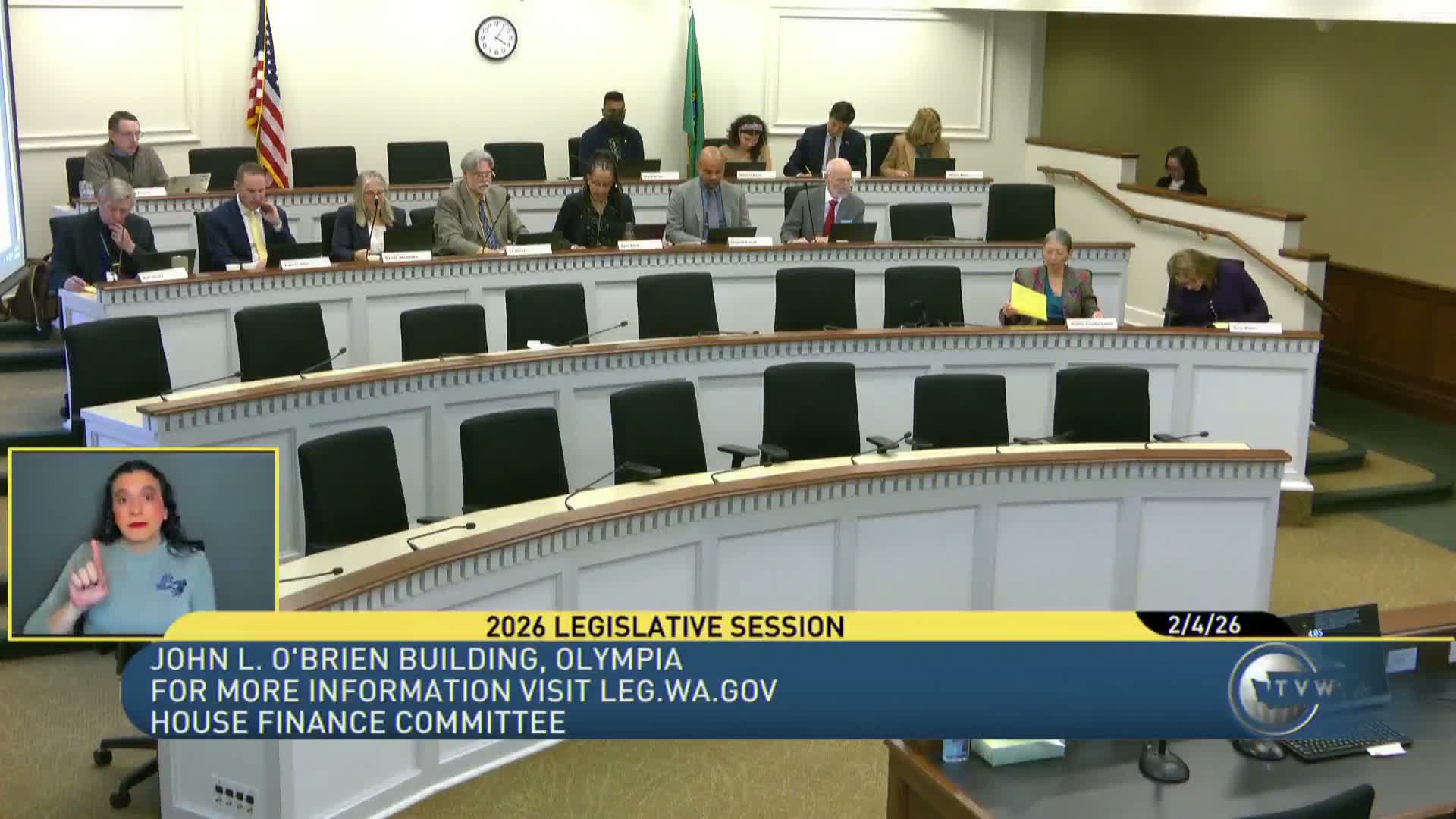
House Finance heard House Bill 2,584 on Feb. 4, a proposal to create a state sales-and-use-tax exemption for qualifying farm machinery and equipment. John Brzezinski, staff to the committee, told lawmakers the exemption would require either an exemption certificate prescribed by the Department of Revenue or seller-recorded sale data under the Streamlined Sales and Use Tax Agreement; the machinery must sell for $10,000 or more and the eligible farmer must generally have had at least $10,000 in gross sales, harvested value, or estimated product value in the immediately preceding tax year (with exceptions for new or returning farmers). Brzezinski also said combined farm income across affiliates must not have exceeded $2,000,000 in the prior year and that the exemption would expire on Oct. 1, 2036. He said a fiscal note had been requested but was not yet available.
Sponsor Tom Denn, who identified himself as representing the 13th Legislative District, said the bill would provide targeted relief to producers facing tight margins and to rural economies that depend on farm purchases. "Agriculture producers in the state of Washington have never had it harder," Denn said, adding the exemption could help farms "stay afloat until our commodity prices come up." He also raised mental-health concerns within the farming community when describing the bill's motivation.
Testimony at the public hearing split. Pam Lewison, ag research director at the Washington Policy Center, testified in support and argued removing sales tax on large-capital farm purchases reduces barriers to adopting newer, more fuel-efficient equipment that can lower emissions and soil compaction. Stacy Rasmussen, a farmer in eastern Washington, said that with equipment purchases last year she could have reinvested $45,000 under the exemption, and framed the change as strengthening the agricultural economy.
Paul Jewell, speaking for the Washington State Association of Counties, said his members were concerned about expanding exemptions to local sales and use taxes. Jewell noted counties rely heavily on sales tax revenue and warned that even small exemptions can have cumulative local fiscal impacts; he cited conservative statewide estimates of $300 million to $800 million per biennium in lost local revenue from existing sales tax exemptions.
The committee closed the public hearing on HB 2,584. Committee staff noted the bill will be placed on the executive session agenda for further committee consideration on the following morning.