
Committee hears bill to update Washington State Housing Finance Commission’s authority
Get AI-powered insights, summaries, and transcripts
Subscribe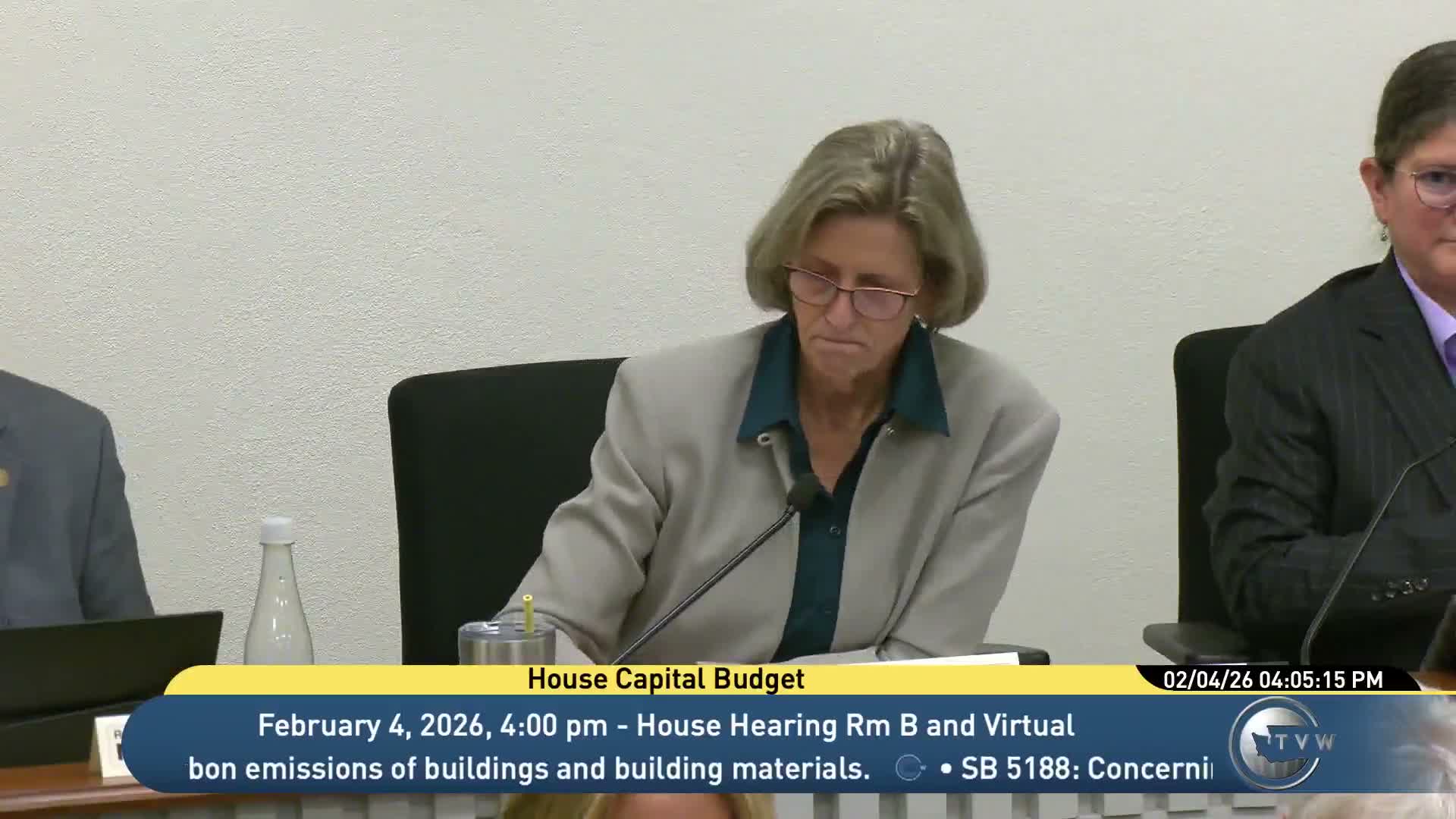
Summary
A Capital Budget Committee hearing on Substitute House Bill 2236 outlined statutory updates that would let the Washington State Housing Finance Commission make direct loans for multifamily gap financing, extend bond counsel terms, remove some notification and plan requirements, and clarify the commission is not a retail mortgage lender.
The Capital Budget Committee opened a public hearing on Substitute House Bill 2236, a bill to modernize the Washington State Housing Finance Commission’s statute and expand its financing tools for affordable housing. Staff described a package of changes that would authorize the Commission to make mortgage loans directly to borrowers for multifamily (non-owner) housing projects, extend bond counsel terms from two to four years, remove a requirement to notify the state finance committee before issuing bonds, and repeal two statutory requirements including the dormant housing finance program and a mandated housing finance plan.
Representative Janice Son, the bill sponsor, said the updates are intended to "update and modernize their statute" and stressed the bill includes clarifying language that the Commission is not intended to "function as a retail mortgage lender and is not authorized to compete with private financial institutions in originating mortgage loans to individual home buyers." She said banking partners welcomed that clarification.
Steve Walker, Executive Director of the Washington State Housing Finance Commission, told the committee the Commission was created by the Legislature in 1983 and that its debt is separate from state debt. Walker said the Commission’s core functions — issuing bonds and allocating federal low-income housing tax credits — would remain unchanged but that the bill would give the Commission additional tools to provide gap financing for shovel-ready multifamily projects and to support smaller starter-home projects not suited to large bond or tax-credit financing. Walker noted the fiscal note shows no state operating or capital budget impact because the Commission is not a budgeted state entity.
Committee members asked about how higher interest rates affect financing and whether new products such as a proposed 50-year mortgage would materially change homeownership opportunities. Walker and staff responded that higher interest rates are affecting construction costs and that down-payment assistance and targeted gap financing are the most effective levers to "right-size" mortgages to household incomes. Committee members also pressed for equity protections; staff and Commission representatives described existing down-payment programs (including the Covenant Homeownership Program) and said those programs are being informed by work with the Black Home Initiative and other community partners.
The hearing included technical questions but no committee vote on SHB 2236. The chair closed the SHB 2236 hearing and moved to other agenda items. The bill will remain under consideration pending any amendments and further committee action.