
Tennessee House adopts one-time summer transfer rule for immediate athletic eligibility
Get AI-powered insights, summaries, and transcripts
Subscribe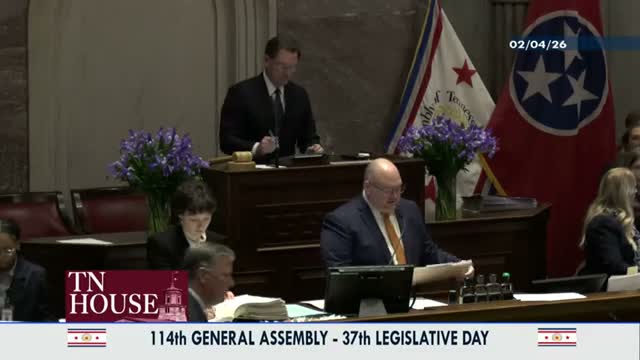
Summary
The House passed Senate Bill 16, adopting an amendment that allows students who transfer schools during the summer to be immediately eligible for interscholastic athletics once per grade span (grades 6–8 and 9–12). Supporters said the change reflects TSSAA input; critics warned of recruiting and competitive-balance risks.
Chairman Spicke moved adoption of House Amendment 3 to Senate Bill 16 and then pressed for final passage, saying the amendment reflected work with the Tennessee Secondary School Athletic Association (TSSAA).
"Members, this is our TSSAA bill," Chairman Spicke said, describing the amendment’s core: immediate eligibility for students who transfer during the summer between school years, limited to a single transfer within the grade span (grades 6–8 and 9–12). The amendment explicitly excludes in‑year transfers and any second or subsequent transfer within the same grade span, preserves existing eligibility standards, and directs that any court challenge to an eligibility decision be filed in the county of the association’s principal office. The amendment also clarifies it does not create a private right of action against an association that regulates interscholastic competition.
Proponents framed the change as modest and student‑centered. Representative Fritz said the amendment protected "parental rights" and gave affected students and families a clearer path for participation. Representative Hart, a former coach, said he ultimately supported the measure after committee review and praised TSSAA for proposing the fix.
Opponents cautioned against legislative overreach into association governance. Representative Clemens requested explanation and warned against routinely adopting substantive floor amendments that had not been vetted through committees. Representative Mitchell voiced concern that the change could re‑open avenues for heavy recruiting by powerhouse private schools, warning it could hollow out small-town programs.
Clerk announcements on the floor indicated adoption of amendment number 3 and later that Senate Bill 16 as amended received a constitutional majority for final passage. The transcript uses the initialism "TSSAA" throughout; TSSAA refers to the Tennessee Secondary School Athletic Association, the body that sets many interscholastic rules in Tennessee.
The bill’s immediate effect is procedural — it changes eligibility rules and litigation venue language as written in the amendment. House members who spoke said existing TSSAA recruiting rules and complaint mechanisms would still apply for alleged recruiting violations. The House did not create a new private cause of action against associations under the amendment.
Next steps: the bill, as amended and passed on third reading, will be sent to the Senate (or back to the Senate as appropriate for concurrence, per normal legislative procedure).