Senate committee advances tuition-guarantee bill after debate over funding and student impact
Loading...
Summary
Senate Education Committee advanced Senate File 2,002, a proposal to guarantee a fixed tuition price for each incoming freshman cohort starting in 2027; supporters said it provides certainty while critics warned it front-loads costs and could worsen outcomes for students who leave early without degrees.
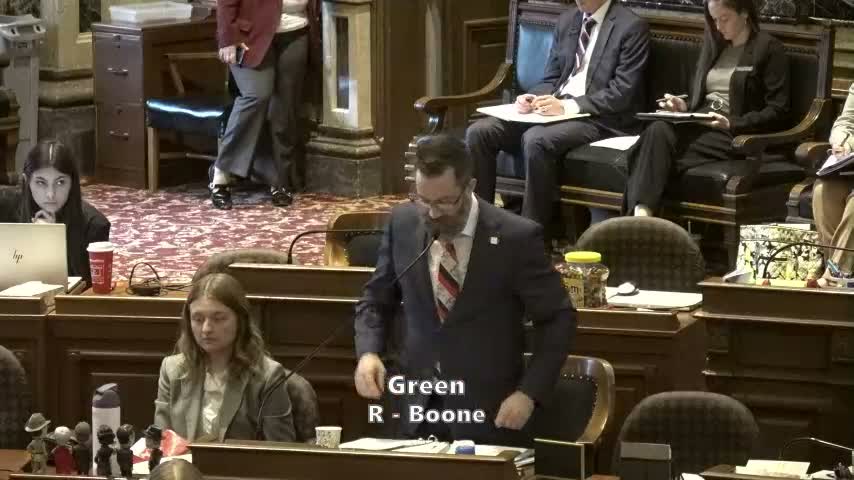
Senate File 2,002, a proposal that would require the Board of Regents to set a fixed tuition price for each incoming freshman cohort, was moved forward by the Senate Education Committee and will be placed on the calendar. Senator Greene introduced the bill and said the policy aims to give students and families greater predictability about college costs, with implementation set to begin in 2027.
Opponents raised financial and equity concerns during committee discussion. Senator Kornbach, citing a Regents report, said the flat-four-year tuition does not reduce aggregate costs for students; instead, it shifts costs forward by ‘‘front-loading’’ charges into the freshman and sophomore years. Kornbach argued that because universities must cover the same total costs over four years, a flat schedule merely reassigns when students pay, potentially harming those who attend one or two years and then leave with debt and no degree. He noted examples of other universities that have tried flat tuition and later abandoned it and highlighted uncertainty from federal and state funding and inflation as implementation risks.
Senator Trone Garrett asked whether the bill guarantees multiyear state funding to protect the Regents from year-to-year funding fluctuations; Senator Greene said the bill does not alter annual funding determinations. Garrett and other critics said without a funding guarantee, asking universities to keep tuition flat is unfair and could leave institutions exposed to budget shortfalls.
The motion to advance the bill was offered by Senator Greene; short-form voice voting was called and the bill was advanced as a committee bill to the calendar. The committee recorded several 'no' votes for the record. The bill will face additional consideration on the calendar and may be subject to amendment or fiscal review before final action.