Get Full Government Meeting Transcripts, Videos, & Alerts Forever!
Get email alerts on the Regional Sewer District topic
No spam. Unsubscribe anytime.
Consultant outlines plan for DeKalb County regional sewer district; commissioners ask for more study
Summary
BCS Management presented a plan to create a DeKalb County Regional Sewer District to address failing septic systems, pursue grants and preserve local control over service areas. Commissioners asked for cost, rate and right-of-way analysis and agreed to return the item in four weeks for more study.
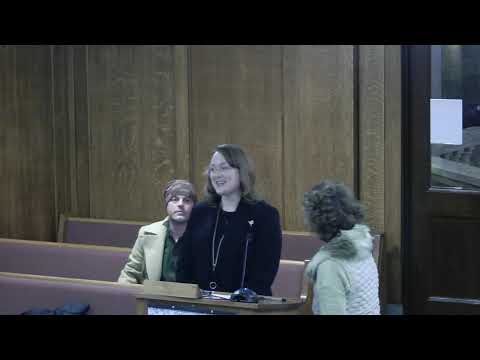
BCS Management consultant Lana Berghazazi urged DeKalb County commissioners on Feb. 2 to consider forming a county regional sewer district to address long-standing failing septic systems and to position the county to control future sewer-service areas.
Berghazazi said the proposed district would be a standalone governmental entity with an appointed board and the power to enter contracts, incur debt, receive grants and hire staff. She said the approach is intended to prevent adjacent utilities from unilaterally extending service into unserved areas and to make the county more competitive for state and federal septic-elimination funding.
"There are 108 regional sewer districts in Indiana," Berghazazi said, describing examples where districts either administer service areas without owning lines or serve as an operational utility when appropriate. She emphasized that the immediate proposal is to create an entity and identify priority projects, not to build sewer infrastructure countywide.
Commissioners and members of the public pressed for specifics. Tom Reeves, a board member of the St. Joseph/Spencerville Sewer District, asked for ballpark construction costs and said recent bids had risen sharply on his projects. Berghazazi replied that the formation work—service-area mapping, petitions, public meetings and board training—was the current step and that project-level engineering and cost estimates would follow once priority projects were identified.
Officials also discussed who would set user and connection fees if the county attached to an existing treatment provider under interlocal agreements. Berghazazi described those tap-in and wholesale treatment negotiations as a business negotiation between the regional district and the treatment provider, and she said exemptions typically include compliant septics, homes more than about 300 feet from a line and large parcels used for agriculture.
Several commissioners voiced concern about preserving local control and avoiding a situation where the city of Fort Wayne or other outside utilities develop inside DeKalb County without county oversight. One commissioner said the goal should be to attach to existing plants or work by agreement rather than build and operate a county-owned treatment plant.
After extended Q&A and requests for additional detail on right-of-way authority and cost estimates, commissioners agreed to defer the matter so staff and commissioners could gather more information and solicit public input. A commissioner asked the item be returned to the agenda in four weeks for further consideration.
What happens next: The commission set the item for additional study and anticipated returning to the topic after targeted research on potential service-area boundaries, rights-of-way questions and preliminary project costs.