Get Full Government Meeting Transcripts, Videos, & Alerts Forever!
Get email alerts on the Homelessness Pit 2025 topic
No spam. Unsubscribe anytime.
Committee hears 2025 point‑in‑time findings as Montgomery County reports sharp rise in family homelessness
Summary
County and regional officials told the Montgomery County Health and Human Services Committee that the January 2025 point‑in‑time count and related local data show a large increase in family homelessness, urging investments in prevention, expanded rental assistance and voucher partnerships to avert further rises.
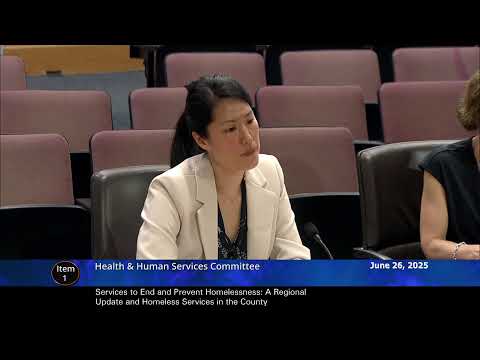
Montgomery County Health and Human Services officials and regional partners presented the results of the January 2025 point‑in‑time (PIT) count and local data to the county’s HHS Committee on June 26, saying the regionwide snapshot and county figures point to mounting needs and urgent preventive steps.
"It is only a point in time," Sam Kenny, regional homeless systems coordinator at the Metropolitan Washington Council of Governments (COG), told the committee, stressing the PIT is a snapshot and not a full measure of need. He said the region’s count for the nights collected in January 2025 was roughly 9,660 people and that local variation means jurisdictions must pair the PIT with other data to understand trends.
County officials told the committee Montgomery County saw a substantial local increase. "Overall, Montgomery County saw a significant increase in homelessness, 32% rise from 2024," Chief Hong of the county Department of Health and Human Services said. Hong said the increase was concentrated among families: the number of people in family units rose by about 80%, and family units "essentially doubled from 103 to 204." She added parenting youth and veterans also increased.
Why it matters: county staff and COG framed the spike as driven by tight rental markets and eroding safety nets. Hong listed high rents, wages that have not kept pace with inflation, the end of COVID‑era emergency rental assistance and rising utility and food costs as contributing causes. She also highlighted increased reports of domestic violence and households with disabilities that limit earning potential.
County data presented to the committee showed eviction filings and executions rising markedly since FY22 and a sampling of housing stabilization clients (January–March) with large arrearages. Hong said about 30% of arrearages above the county assistance cap were $3,000–$6,000, 34% were $6,000–$9,000 and 18% were $9,000–$12,000 or higher—amounts that exceed the county’s $3,000 maximum arrearage assistance in many cases and limit eviction prevention.
What the county is doing: Chief Hong described targeted and preventive programs the county uses and recommended scaling those investments. She credited a recent special appropriation for the SHARP program (targeted to families), saying it helped house 121 families in four months — more than 400 people, a majority children — and showed how resources translate quickly into exits to permanent housing when they are available.
Hong also outlined the rental assistance program (RAP), which in 2025 served 936 households and provides a shallow subsidy (up to about $503 per month). She said the program’s average annual subsidy per household is roughly $7,850 and argued prevention is far cheaper than shelter: "The rental assistance program, the average cost per year per household is $7,850," she said, while county figures showed emergency shelter for individuals at about $28,923 per bed per year, family emergency shelter at about $73,188 per family per year and overflow motel costs of about $36,500 per room per year.
Regional coordination and data sharing: COG presenters (Hillary Chapman and Kenny) outlined a regional push to align definitions and share higher‑quality, by‑name data under the Built for Zero methodology and a partnership with Community Solutions. They said some Continuums of Care are now ingesting historic data into a shared warehouse among Montgomery County, Prince George’s County and the District of Columbia and have begun targeted case conferencing (starting with veterans) to identify people with ties to multiple jurisdictions.
Kenny warned that federal budget proposals could threaten the work: presenters said a proposed federal budget would reduce Continuum of Care, rental assistance and public housing funding by substantial percentages and could destabilize local prevention and housing programs.
Council questions and next steps: County staff and COG members answered questions about targeting racial disparities (presenters acknowledged systemic causes and cited a regional fair housing plan and past equity analyses), veteran services (VASH vouchers remain a core federal tool), behavioral health engagement in shelters (contracts with providers such as Urban Behavioral Associates and outreach clinicians were cited) and services for immigrant and multilingual households (county services are offered in multiple languages and recent state funding for newcomers will continue into FY26, presenters said).
Several council members pressed for more data sharing and transparency of the region’s bed capacity and policies so jurisdictions can compare resources and avoid misinterpreting increases in local PIT counts. Chief Hong and COG staff said work is underway on data quality and legal/technical agreements and that a six‑month regional action plan will be developed in September.
The committee did not take formal votes on new policy in the session; members asked staff to continue reporting and refining data, and the meeting was adjourned.