Get Full Government Meeting Transcripts, Videos, & Alerts Forever!
Get email alerts on the Curriculum Adoption topic
No spam. Unsubscribe anytime.
DC Prep outlines multi‑year plan to adopt new ELA next year and math the following year
Summary
DC Prep presented its process for selecting new K–8 ELA and math curricula, saying an ELA adoption is planned for 2026–27 and math will follow; the board heard details of task‑force reviews, pilot lessons, assessment alignment and a phased training and data‑systems rollout.
DC Prep’s leadership told the board on Nov. 20 that the network will adopt a new ELA curriculum for school year 2026–27 and a new math curriculum the following year after a multi‑month review.
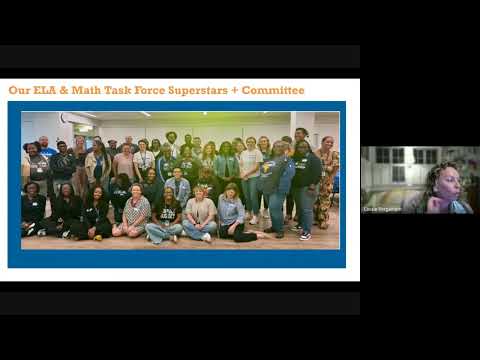
"We are going to implement ELA in school year '26, '27, and math the following year," said Cassie, who described a process that included a task force of teachers and leaders, classroom pilots by every teacher on the committee, family review sessions, and consultations with external experts. She said the team limited options to curricula that earned green ratings on EdReports and appear on ASE’s approved list.
Cassie said the group evaluated three ELA vendors (Fish Tank, Amplify and Great Minds/Arts & Letters) and two math options (Eureka Math Squared and Illustrative Math). She said the selection emphasized coherence, supports for English learners and students with IEPs, assessment alignment, and teacher usability so classrooms are more consistent networkwide.
The board asked about features such as AI: a member asked if any platforms include teacher‑facing AI tools. Cassie said some literacy platforms provide automated feedback and trend analysis from student writing that teachers can use to form small groups and reteach.
On measuring success, Cassie said the network will continue DIBELS (K–5 benchmarks) and Achievement Network (ANET) assessments and will set specific targets tied to those tools. "We will set them. We will have really specific targets for those different assessments," she said, adding that it is unrealistic to expect large gains in the first year of implementation because of the time required to train staff and integrate new systems.
Cassie described a phased implementation: reconvening the task force in February, piloting a unit in May or June as a "soft launch," using summer leadership retreats and August orientations for rollout, and dedicating substantial staff time over the first year to training, data‑system updates and policy changes (grade books, IEP alignment, scheduling).
Board members repeatedly emphasized implementation capacity and asked whether extra resources could accelerate math adoption; Cassie said the network deliberately aligned ELA and math planning to minimize repeating big schedule and systems changes and to ensure long‑term sustainability.
The board will receive a final recommendation after the winter break and expected a decision back to the board in December or following the committee meetings, per the presenters’ timeline.