Get Full Government Meeting Transcripts, Videos, & Alerts Forever!
Get email alerts on the E Waste topic
No spam. Unsubscribe anytime.
Home Resource urges repair, donation and proper recycling to keep toxic e-waste out of landfills
Summary
Home Resource staffer Caitlin outlined repair, donation, repurposing and recycling options for electronic waste, warned of toxic chemicals and lithium battery fire risks, and cited Montana’s proposed right-to-repair bill (HB390) as a way to improve repair access.
Caitlin, a staff member at Home Resource, told a Missoula lunch-and-learn audience that electronic waste contains toxic materials that should not go to landfills. "It often contains a lot of toxic chemicals like lead, mercury, cadmium," she said, and added that crushed lithium batteries can ignite in landfills.
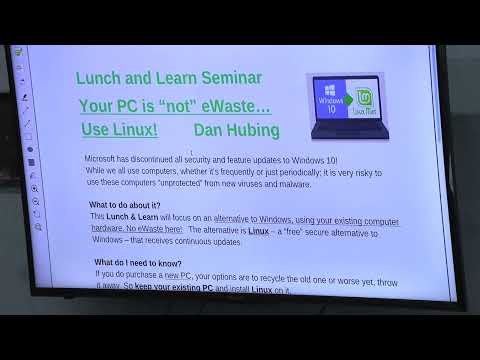
Caitlin presented four main options for dealing with old electronics: repair, donate, repurpose and recycle. For repair, she pointed to local services and the library makerspace Linux project as ways to revive older machines. She noted several local businesses and organizations that offer repair or reuse services, including Big Sky Cell Phone and Electronics Repair, Missoula Mac Repair and the Geek Squad at Best Buy.
On donation, Caitlin said organizations such as Computers with Causes and Secure the Call accept working devices for people who need them; Sentinel High School’s robotics program can also repurpose parts. Home Resource does not accept electronics for resale, she said, and urged callers to check acceptance rules with thrift stores and charities.
For recycling, Caitlin recommended checking retailer policies because acceptance varies by item: Best Buy, Staples and Target accept some electronics but have limits and different item lists; Best Buy limits in-store drop-offs to three items per day, she said. Local options she named for broader recycling included Montana Computer Recycling and uBreakiFix/iFix.
Caitlin also mentioned state-level policy: "Montana is actually trying to get this law passed. It's called HB390," she said, referring to pending right-to-repair legislation that would require manufacturers to make repair information and parts available. She encouraged residents to consider repair as a first option to reduce waste and protect public health.
Audience members asked about safe battery disposal and how to remove personal data before donating. Caitlin and Hubing recommended backing up personal files to an external drive and reformatting or reinstalling an operating system before handing off a device. They suggested checking retailer or recycler websites for exact item lists and taking small batteries to local drop-off points such as Home Resource or Staples where accepted.
The session closed with a reminder about the next Home Resource fix-it clinic (Feb. 28) and contact information for local repair and recycling resources.