
Evanston rules committee keeps two‑thirds threshold for selecting acting mayor after tied vote
Get AI-powered insights, summaries, and transcripts
Sign Up Free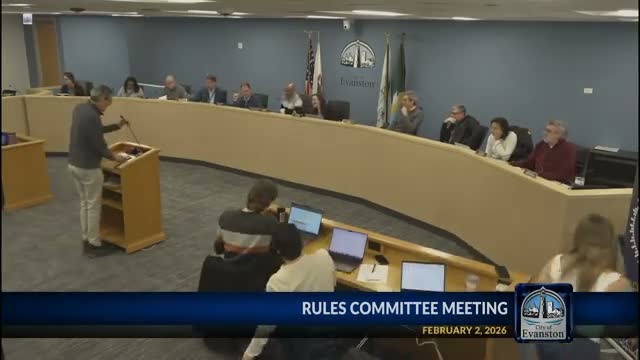
Summary
After public commenters urged the city to keep a six‑vote supermajority, the Rules Committee rejected a motion to rescind the two‑thirds (six‑vote) requirement for appointing an acting mayor, leaving the higher threshold intact; legal staff also said restricting who may serve would require a referendum.
The Evanston Rules Committee on Feb. 2 rejected a motion to rescind the two‑thirds (six‑vote) requirement to select an acting mayor, leaving the supermajority rule in place.
Public commenters urged the committee to preserve the higher threshold ahead of committee debate. Jeff Berini, a 2nd Ward resident, told the committee the two‑thirds rule “ensures that this council … have to compromise” when choosing an acting mayor. Several other speakers, including Kiera Kelly and Laurie Keenan, said rolling back the rule would undermine public trust and appeared politically motivated.
City staff and legal advisers laid out the options before the committee. Liza, a city staff presenter, identified the acting‑mayor rules and the vote threshold as two substantive issues under review. Corporation counsel reported that outside counsel (Ansel Glink) advised the council cannot, by rule, bar a candidate from serving as acting mayor (that would require a referendum), while changing the vote threshold between a simple majority and a supermajority is within the city’s home‑rule authority.
A committee member moved to rescind the two‑thirds requirement and the motion was seconded and debated. Supporters of rescinding said a simple majority is standard among Illinois municipalities and that the two‑thirds rule can be unworkable in a narrowly divided council. Opponents — including other council members and multiple public commenters — argued the supermajority protects consensus and reduces the chance of political advantage for an unelected acting mayor.
The committee conducted a roll‑call vote. The tally was five in favor and five against, falling short of the six votes that would be necessary to change the rule; the motion failed and the two‑thirds requirement remained. The committee then voted to forward the rules package to the full City Council for final consideration.
What’s next: The rules package, with the acting‑mayor language intact, will go to the City Council for a final vote. Separately, legal staff said any effort to restrict who may serve as acting mayor (for example, barring candidates) would require a city referendum.