Get Full Government Meeting Transcripts, Videos, & Alerts Forever!
Get email alerts on the Capital Prioritization topic
No spam. Unsubscribe anytime.
Review Committee endorses scoring tool approach and proposes weights for capital‑project prioritization
Summary
Staff demonstrated a GFOA‑informed capital‑projects prioritization tool; the committee debated weighting of criteria (health & safety, mandates, resiliency, bundling) and agreed to a staff‑refined set of weights to be forwarded to the commission for adoption and inclusion in budget appendices.
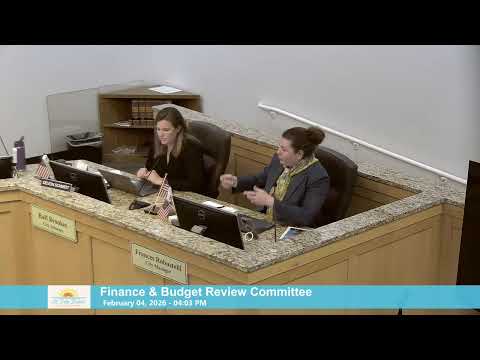
Devin Schmidt, the city’s finance director, and staff presented a capital‑projects prioritization and scoring tool designed to rank city projects objectively. The tool uses 10 criteria — including health and safety; regulatory and mandate obligations; asset condition and risk; recovery and resiliency; economic and smart growth; life‑cycle operation & maintenance; funding leverage; project readiness; and bundling and coordination — with each criterion scored and weighted to create an overall rank.
Staff said the system is intended to be transparent and repeatable year to year and to appear as an appendix in budget documents so the public can see why one project outranked another. The committee discussed proposed weights and trade‑offs (for example, whether bundling/coordination should be raised because coordinating projects can create large savings). After discussion, the board proposed adjustments and reached consensus to forward the following weights to the commission for consideration: health & safety 15; regulatory/mandate 15; asset condition & risk 12; recovery & resiliency 12; economic & smart growth 10; bundling & coordination 11; life‑cycle O&M 5; funding leverage & restrictions 5; project readiness 5 (and other supporting criteria as presented).
Board members emphasized that staff should retain technical responsibility for scoring the roughly 60 projects in the database but that commissioners and the public should be able to review the scoring inputs and contest specific ratings. Staff agreed to provide the scoring output and documentation in the budget appendix and to return the tool annually for review.
The committee framed the tool as a way to manage a long list of capital needs, prioritize safety and mandates during the city’s recovery and resiliency phase, and give commissioners the ability to shift weights as strategic priorities evolve.