MoHealthNet seeks hundreds of millions for pharmacy, MMIS modernization and data tools amid supplemental pressures
Loading...
Summary
Medicaid Director Josh Moore told the House subcommittee MoHealthNet’s FY2027 request includes large pharmacy and managed‑care cost‑to‑continue items, modular MMIS modernization planning and data analytics investments to reduce overpayments; officials warned past supplementals have been large and projections carry uncertainty.
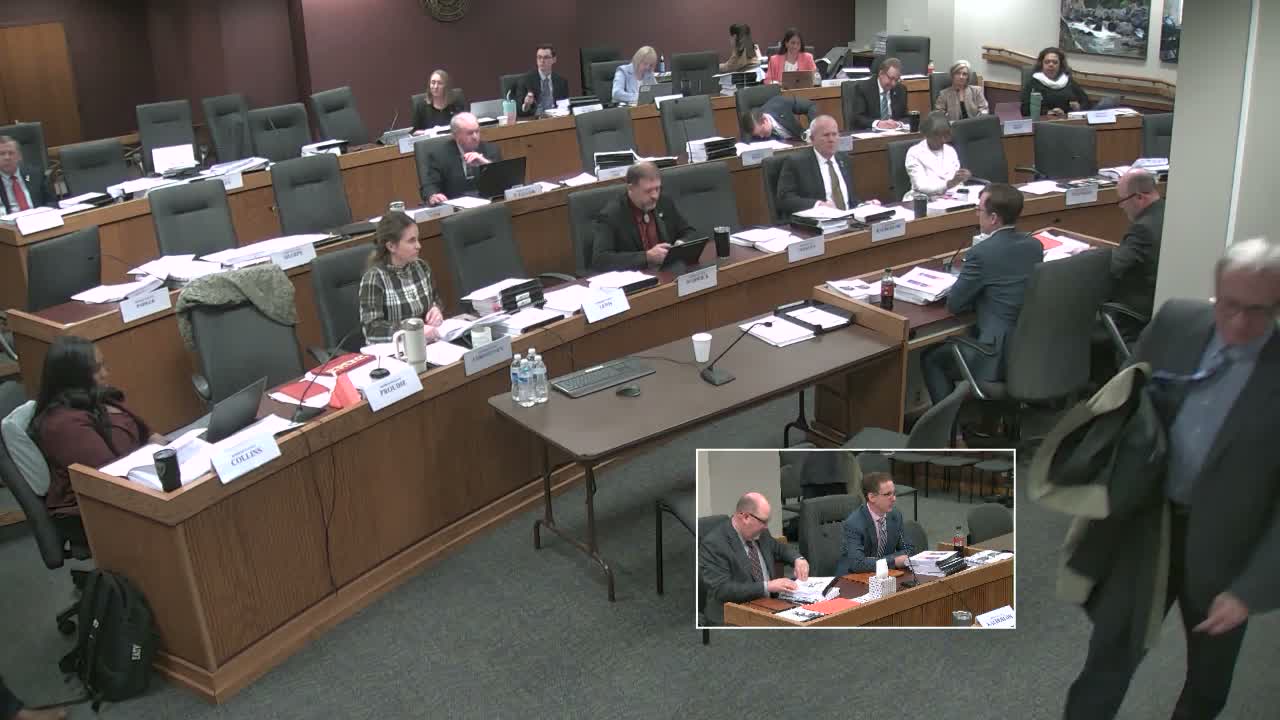
Josh Moore, Missouri’s Medicaid director, told the House budget subcommittee on Feb. 6 that MoHealthNet’s FY2027 funding outlook is being driven by pharmacy inflation, managed‑care actuarial increases and planned IT modernization projects.
"We serve about 1,200,000 Missourians," Moore said, underlining the program’s size and why officials said accurate projections and data analytics are essential.
MoHealthNet outlined a multi‑part FY2027 package: actuarial increases for managed care (roughly a mid‑single digit percentage), specialty and non‑specialty pharmacy PMPM increases, outpatient fee‑schedule updates tied to Medicare calendar‑year indexes, and major modular MMIS investments. The agency also asked for enhanced analytics and program‑integrity tools that officials said have already produced recoveries (an example dashboard uncovered a $400,000 overpayment traced to a system error).
On IT and modernization, CIO Toy Wilde described a phased MMIS modernization plan over several years to meet federal expectations and preserve matching authority through 2030. The planned staffing path would add eight MMIS‑implementation staff in FY27 (part of an 18‑person multi‑year plan) to support modular procurements and ensure continuity of services while new systems are implemented.
MoHealthNet noted a pattern of supplemental requests: FY26 supplemental asks for Medicaid exceeded $1 billion in total (including federal match) and pharmacy was a large driver; MoHealthNet staff provided a November snapshot for FY26 supplemental needs and cautioned that utilization and price trends create uncertainty. CFO Tony Bridal said the department provides monthly updated projections to House budget staff and will supply the committee with historical supplemental lines on request.
Members asked for more granular metrics — managed‑care medical loss ratios, aggregate profit/admin percentages for MCOs, historical pharmacy cost trends and how lapse lines might be repurposed. Officials agreed to provide those datasets and a breakdown of managed‑care spend across CHIP, AEG and the main Medicaid population.
What’s next: MoHealthNet will return requested financial breakdowns (pharmacy trend series, managed care margin/MLR figures, MMIS vendor benchmarks and monthly projections) for the committee to use during FY2027 appropriation markup.