Lifetime Citizen Portal Access — AI Briefings, Alerts & Unlimited Follows
PVTA pilots electric paratransit plan after Holyoke outreach; residents and disability advocates urge accessibility and clear outreach
Loading...
Summary
PVTA held public outreach in Holyoke about a grant-funded pilot to buy battery-electric paratransit vans. Staff warned vehicle availability and infrastructure costs limit purchases; attendees supported a pilot while raising concerns about wheelchair configurations, winter range, maintenance, and outreach to seniors.
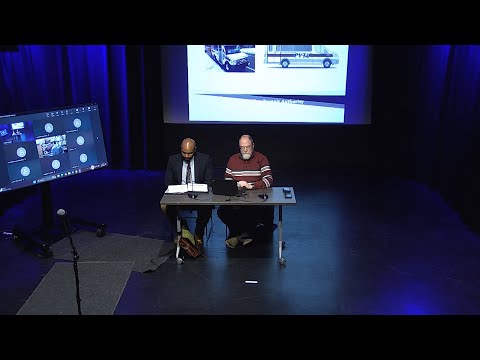
Paul Burns, PVTA director of transit operations, outlined a grant-funded pilot to test battery-electric paratransit vans and asked residents in Holyoke for feedback on designs, accessibility and operations.
Burns said PVTA received funding from MassCEC to pilot electric paratransit vans but that the market is constrained: "There are only two readily available paratransit vehicles that are ready and electrically equipped," he said, and added that Buy America rules and rising electrical-infrastructure costs have increased the per-vehicle program cost. Burns described two candidate models under consideration: a Ford Transit EV (roughly $120,000 apiece) and a low-floor ADA Pro Max on a Ram ProMaster platform (nearer $350,000'$400,000), noting trade-offs between price and ease of boarding.
Why it matters: PVTA serves 24 communities across about 600 square miles and operates a large paratransit fleet that provides critical trips for people with disabilities and older residents. Burns said paratransit ridership has not fully recovered from the pandemic (FY19 paratransit passengers: 260,582; most recent reported: about 212,568, ~82% of FY19), and PVTA must weigh performance, accessibility and costs when phasing in electric vans.
Residents and advocates broadly welcomed electrification for air-quality and rider-experience benefits but urged caution and local testing. "Anything that we can do to electrify public transit'and encourage people to take public transit'is really, really important," said Sarita, who leads the Healthy Air Network and the Pioneer Valley Asthma Coalition, citing local particulate-matter data that links transportation corridors to pollution. City Councilor Patty Devine urged targeted outreach to seniors and suggested working with gas-and-electric bill mailings to reach households who may not read local papers.
Disability advocates pressed PVTA on practical accessibility and maintenance questions. "I'm the chair of the Commission on Disability," said Lynn Horan, who uses a wheelchair; she praised accessible public vehicles but said falling paratransit ridership makes it important to hear directly from riders about barriers. Burns said the Pro Max'a low-floor vehicle'would be easier for many passengers to board without a lift, while the Ford Transit EV would require lifts for wheelchair boarding and could be configured to carry two wheelchair positions operationally to preserve mixed ridership.
Attendees also raised winter-range and maintenance concerns. A participant who identified himself as Alan said heaters can reduce EV range in New England winters; Burns acknowledged that some fixed-route vehicles have diesel generator backups in cold months and said PVTA has been training staff to perform most EV maintenance in-house while subcontracting specialized powertrain work when necessary.
PVTA staff addressed logistics and timing: Burns said infrastructure upgrades have pushed pilot costs higher (electrical upgrade estimates rose from about $150,000 to roughly $400,000 during the grant award period) and that vehicle lead times can be long; the agency estimated gasoline-powered replacement vehicles require about a year to 18 months from order to delivery and said electric-van timelines depend on market availability.
Participants encouraged PVTA to run local demonstrations. PVTA and its contractors (NV Transportation and MV Transportation) offered to arrange vehicle demonstrations and short trial runs in Holyoke so riders and advocates could test boarding and interior configurations. Burns and staff also asked for continued feedback through email, phone and the PVTA website.
The outreach ended with a community poll in which in-room attendees indicated support for electrification; staff said online participants registered no objection. PVTA said it will use the feedback to shape a pilot procurement and infrastructure plan, balancing cost, accessibility and operational reliability.
What's next: PVTA intends to pilot a small number of electric paratransit vans, contingent on vehicle availability and funding; staff offered to coordinate demonstrations and follow-up meetings with disability advocates and senior centers to refine configurations and outreach plans.