
Debate over Christian Hill bridge and Ashuelot Rail Trail grants divides Swansea voters
Get AI-powered insights, summaries, and transcripts
Subscribe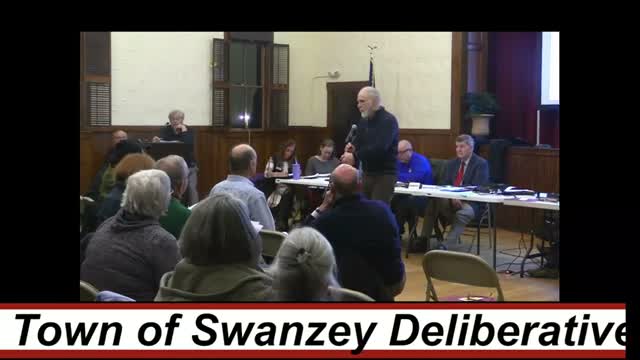
Summary
Petitioners urged preserving the historic Christian Hill Road bridge in place; town officials and trail proponents described federal funding and a plan to reuse parts of the existing bridge to fix washouts on the Ashuelot Rail Trail. Supporters warned that rejecting the DOT/FHWA plan could cost the town roughly $2.5 million in grant funding and delay trail repairs into the next decade.
Two petition articles and extensive public comment on the Christian Hill Road bridge and Ashuelot Rail Trail drew some of the most heated discussion at Swansea's deliberative session.
Petitioner John Trainor argued the Christian Hill bridge is an important historic landmark and should be preserved in its current location. "I believe we should keep our historic landmarks here in town and not destroy them," he told the meeting, saying the bridge could be repaired rather than demolished and that town voters had not been fully informed in earlier votes.
Town planners and members of the rail‑trail advisory committee and the state and federal agencies described a different picture: the Christian Hill bridge replacement project has secured federal bridge funding and Federal Highway Administration approval under environmental review (NEPA). The DOT and project engineers proposed relocating some historic timber and stone elements to repair washouts on the Ashuelot Rail Trail, allowing both the bridge replacement and trail repairs to proceed under federal programs. Project proponents emphasized that approximately $2.5 million in DOT/FHWA funds are currently allocated for the bridge/rail‑trail work and that reworking the plan now risks losing that funding and pushing repairs out a decade.
The rail‑trail advisory committee and regional stakeholders warned that if petitioners succeed in blocking the project Swansea could be responsible for significant engineering and construction costs to fix washouts and that trail users (including snowmobile clubs) and local economic activity would be harmed. "A loss of about $2.5 million in funding that's already been approved," a trail representative said. Snowmobile club leaders and other trail advocates described the Ashuelot corridor as an important regional route and urged caution about forfeiting federal funds.
Opponents of the DOT plan argued the current bridge has historic value and that adaptive reuse and repair should be studied further rather than accepting replacement tied to federal grant requirements. The meeting recorded multiple calls for additional study and for preserving the character of West Swansea village.
Both petition articles were discussed and will appear on the official ballot; the moderator noted that petition articles are placed on the ballot regardless of deliberative action. Select board and planning staff agreed to add clarifying information to the voter guide to help citizens understand the tradeoffs between preservation, federal funding procedures, and timeline risks.