
Dayton school board debates May vs. November levy; directs staff and volunteers to prepare scenarios
Get AI-powered insights, summaries, and transcripts
Sign Up Free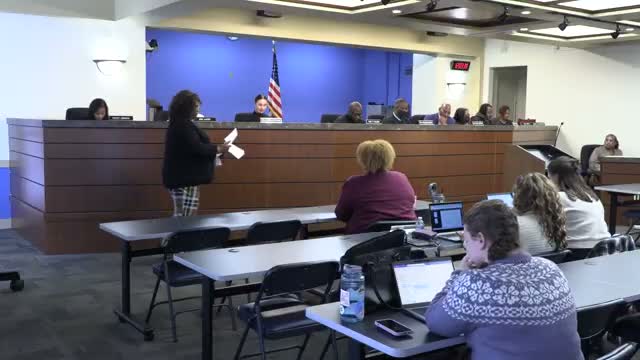
Summary
Board members debated whether to place a proposed school levy on the May primary or the November general election, heard the district faces a roughly $9 million budget gap for next year, and directed staff and a volunteer committee to prepare levy scenarios and community outreach plans.
President Bailey presided as the Dayton Public Schools board spent much of its meeting debating whether to place a proposed levy on the May primary ballot or wait for the November general election. Board members heard administration figures showing an estimated $9,000,000 budget shortfall for the coming school year and agreed to continue planning while recruiting a volunteer levy committee to run a campaign outside district time.
"Before deciding on going to a levy, I thought it was prudent to look at our chances of success electorally," board member Joe Lacey said, summarizing his analysis of primary and general election turnout. Lacey said a comparable primary yielded roughly 15,000 voters in the district, while a general-election turnout was substantially higher. He added, "I will be voting no," on putting the levy on the May ballot, while emphasizing he supports the district’s need for additional revenue.
Superintendent/Treasurer Doctor Lawrence told the board that a recent budget revision shows the district is "still $9,000,000 over projected budget for next year," and said a levy approved in May would allow the district to avoid some staff and program reductions because funds would begin to arrive in January. "Every program and every person," Lawrence said, would be easier to hold if the levy passed in May, the administration said.
Other board members pushed back on timing and campaign readiness. Board member Miss Reiner said she was "more inclined... not a property tax levy, more of income tax levy" as a policy preference and raised concerns about campaign costs and state policy trends for property taxes. Several members noted urban districts nearby have tended to run levies in November and that November turnout historically benefits such efforts.
Members agreed the district cannot use school work hours or district resources to run a campaign. Board members discussed forming an ad hoc, volunteer levy committee to organize fundraising, messaging and door-to-door outreach off campus and outside of staff hours; several members volunteered to help recruit and lead the effort. The board also asked the administration to prepare eight modeled scenarios — including levy pass/fail, carrying debt, staffing reductions and consolidation options — to inform a decision.
No final decision was made about whether the levy will be placed on the May or November ballot. A motion to adjourn was made and seconded, and the chair conducted a roll call before adjourning the meeting.
The board directed staff to return recommendations in April or May with the modeled scenarios and advised that volunteer recruitment for any campaign should begin immediately, outside of district time and district property.