Get Full Government Meeting Transcripts, Videos, & Alerts Forever!
Get email alerts on the County Jails Audits Funding topic
No spam. Unsubscribe anytime.
Standards Council urges standardized jail audits and seeks $13M in supplemental aid to ease county shortfalls
Summary
The Professional Standards Council told legislators counties face audit backlogs and rising jail costs and recommended a 15–16 page single-jail audit checklist, one-time DOC reimbursements up to $5,000, a dedicated DOC analyst, and a supplemental budget request to raise the state jail operations fund toward $28–30 million.
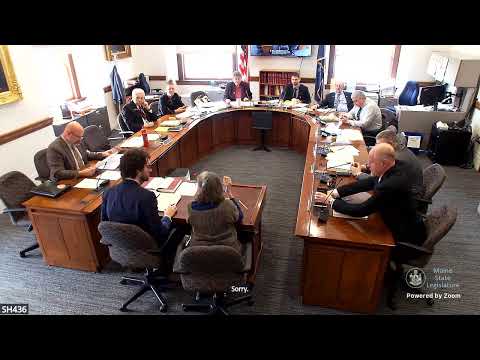
The Criminal Justice and Public Safety Committee heard a report from the County Corrections Professional Standards Council on February 5 detailing audit backlogs, rising personnel and medical costs and recommendations to improve fiscal oversight of county jails.
Tim Curtis, who presented the council’s executive summary, told the panel that auditor shortages have left five counties (Washington, Waldo, Penobscot, Aroostook and Saugatahawk) multiple years behind on general fund audits. "Finding auditors is more and more difficult," Curtis said, describing a pattern of staff turnover and limited audit capacity that pushes jurisdictions to the back of the scheduling line.
To reduce cost and complexity, the council recommends a standardized checklist and a shorter 15–16 page jail audit that would be extracted from existing general fund audits rather than produced as an entirely separate 85‑page report. Curtis said auditors told the council the extraction approach would be the most cost‑effective option and estimated a per‑county one‑time cost of about $5,000 to produce a single jail audit; the Department of Corrections has offered to reimburse counties up to that amount as one‑time funding.
The council also urged ongoing state support. Curtis described a supplemental budget request submitted to the executive branch seeking roughly $13 million across two years — about $4 million for 2026 and $9 million for 2027 — to increase the state jail operations appropriation (currently $20 million) closer to $28–30 million to better offset counties’ rising costs. "Our costs for personnel have grown," Curtis said, noting personnel typically make up about 65% of jail budgets and that inmate medical costs rose about 35% over two years.
The council asked the committee to consider two additional, structural steps: funding a full‑time financial analyst and liaison in the Department of Corrections’ service center to review audits and communicate with counties (the service center currently has a 20‑hour position that has proven hard to fill), and codifying financial reporting rules through the council’s rulemaking process. Curtis said the council plans to begin rulemaking and tentatively targets publication and public hearings this year with a goal to have rules in place by late 2026.
Members pressed on feasibility and outcomes. Representative Steve Bunker asked how counties behind on multi‑year audits could extract the necessary jail schedules in time for the FY26 start; Curtis said some counties can produce separate jail audits while still finalizing prior general audits and that the council anticipates counties will catch up over the coming year. The State Bureau of Identification later told the committee that any automation or large‑scale review would require additional staffing and computer resources.
The report also flagged potential savings from a pending federal Medicaid waiver that Curtis identified as the "11 15 waiver," which — if approved and implemented — could allow retroactive Medicaid billing for up to 90 days of incarceration and reduce county medical contract costs. Curtis cautioned that the waiver is not a silver bullet: counties would still need contracts for medical care and the waiver’s federal approval and implementation remain uncertain.
The council recommended tracking audit results against the monthly reporting counties already submit to the Department of Corrections and instituting a "thirteenth‑month" reconciliation to resolve discrepancies between audits and reported figures. The council said the new checklist and a DOC analyst would enable that reconciliation.
Curtis told the committee the council supports exploring regionalization of jail services over time given the capital cost of new facilities, and that any regional approach would require state partnership and likely state funding assistance. The committee took the report for consideration as it evaluates the supplemental budget request and draft rule changes.