
Florida committee bars use of ADS‑B tracking for automated airport billing
Get AI-powered insights, summaries, and transcripts
Subscribe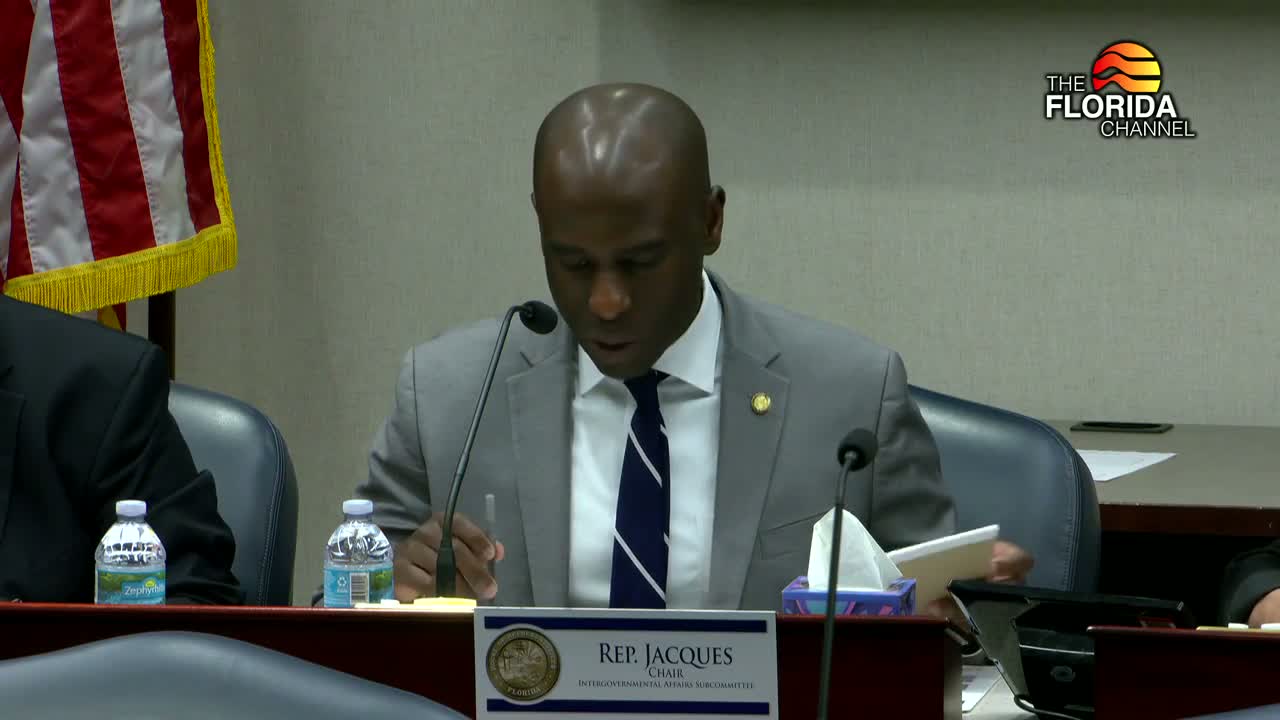
Summary
The House Intergovernmental Affairs Subcommittee advanced HB 387 to prohibit airports and third‑party vendors from using FAA‑mandated ADS‑B flight‑tracking data to assess automated landing or touch‑and‑go fees on small general‑aviation aircraft; an amendment clarifying touch‑and‑go operations was adopted and the bill was reported favorably (15‑0).
The Intergovernmental Affairs Subcommittee voted to report HB 387 favorably after sponsors said the bill would stop airports and private vendors from using automatic dependent surveillance–broadcast (ADS‑B) data to bill small general‑aviation aircraft.
Sponsor Representative Bankston told the committee the FAA required ADS‑B equipment in 2020 for safety and traffic awareness, but third‑party services now use that same data to generate automated invoices that can penalize flight schools and discourage training. "This technology enables aircraft to communicate not only with ATC, but also with each other...it was meant for safety," Bankston said, arguing the measure would "restore [ADSB] to its original intent of collecting data and promoting safety." The sponsor said the bill applies to aircraft with gross weight of 12,499 pounds or less.
An amendment (barcode 709269) adopted in committee defines touch‑and‑go landings and bars use of ADS‑B‑based billing when fees would be calculated from an aircraft entering a specified radius or for touch‑and‑go operations. The sponsor said the amendment aligned the House text with a similar Senate measure.
Members and public proponents emphasized safety and training impacts. Pilot Donald Frano testified that pilots and students may disable ADS‑B when they fear being billed, reducing a safety layer. "If pilots can't see each other, collisions can happen," Frano said, citing incidents he said illustrated the risk.
No members objected to the amendment. The committee recorded a unanimous favorable report (15 yays, 0 nays) and returned the bill to the House process with a committee substitute.
Next steps: HB 387 was reported favorably and will move to the full committee of reference or to the House floor consistent with the chamber's calendar.