
Liberty County workshops proposed updates to subdivision rules to manage rapid growth
Get AI-powered insights, summaries, and transcripts
Subscribe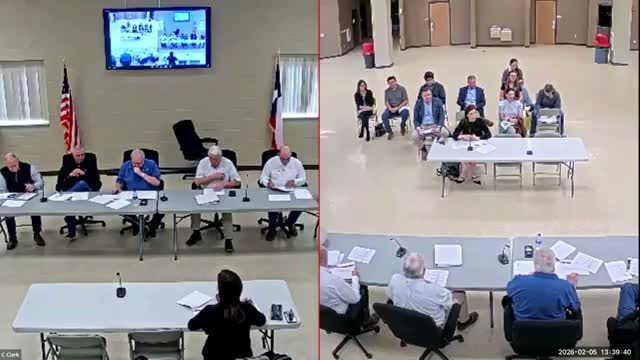
Summary
County workshop reviewed consultant recommendations to tighten subdivision rules on building lines, cul‑de‑sac design, lot standards, plan‑approval timing, inspection requirements and maintenance securities to reduce routine variances and long-term infrastructure risks.
Liberty County commissioners and planning staff spent a workshop session reviewing proposed updates to the county's subdivision rules meant to reduce routine variance requests and improve long‑term infrastructure outcomes.
Katie Harris, a principal at LJA representing the public works group, told the court that common agenda items include variance requests for front building lines, cul‑de‑sac radii, right‑of‑way and pavement widths, lot sizes, construction‑plan timing and maintenance securities. Harris said those recurring items are often driven by differences between the county’s current standards and common practice in nearby cities and counties.
Harris recommended several targeted changes rather than a wholesale rewrite: allow a reduced front building line where lots abut curves or knuckles (from 25 feet down to about 20 feet in those spots), provide an alternate curb‑and‑gutter cul‑de‑sac option (60‑foot ROW with 50‑foot pavement instead of a uniform 70‑foot ROW), and add clearer lot‑width and minimum square‑foot standards so developers and staff have measurable criteria.
She also proposed process changes: permit infrastructure or construction plans to be submitted (and in some cases reviewed) before or concurrently with final plats to prevent post‑approval revisions that create schedule delays, and adopt a minor‑plat pathway (four lots or fewer, existing street frontage, no new public utilities) that staff can approve to reduce the court’s agenda while keeping the court informed via regular reports.
On financial protections, Harris identified a county maintenance‑security program that can place public right‑of‑way under a two‑year maintenance period irrespective of whether homes have been built. She suggested conditioning the county’s acceptance of public improvements on a threshold (for example, a percentage of lots or infrastructure completed) so the county is not left to repair roads damaged after warranty periods lapse.
Commission members pressed on enforcement and inspections. Several court members said required geotechnical and compaction testing often is not carried out or independently verified. One member urged written hold points in the code that require third‑party inspection at critical construction stages and said enforcement mechanisms must be strengthened so developers cannot bypass required inspections.
The court asked LJA to prepare draft ordinance language and options — including sample layouts for smaller lots, mixed‑use or master‑planned communities — and to return for a follow‑up workshop. No formal motions or votes were taken during the workshop; the consultant will distribute draft materials for the court’s review.
The next procedural step, as agreed at the meeting, is for LJA to circulate proposed changes and schedule another workshop so members can consider specific ordinance language and enforcement mechanisms before any formal adoption process.