
Wilson County panel outlines how local, state and volunteer groups coordinate disaster response
Get AI-powered insights, summaries, and transcripts
Sign Up Free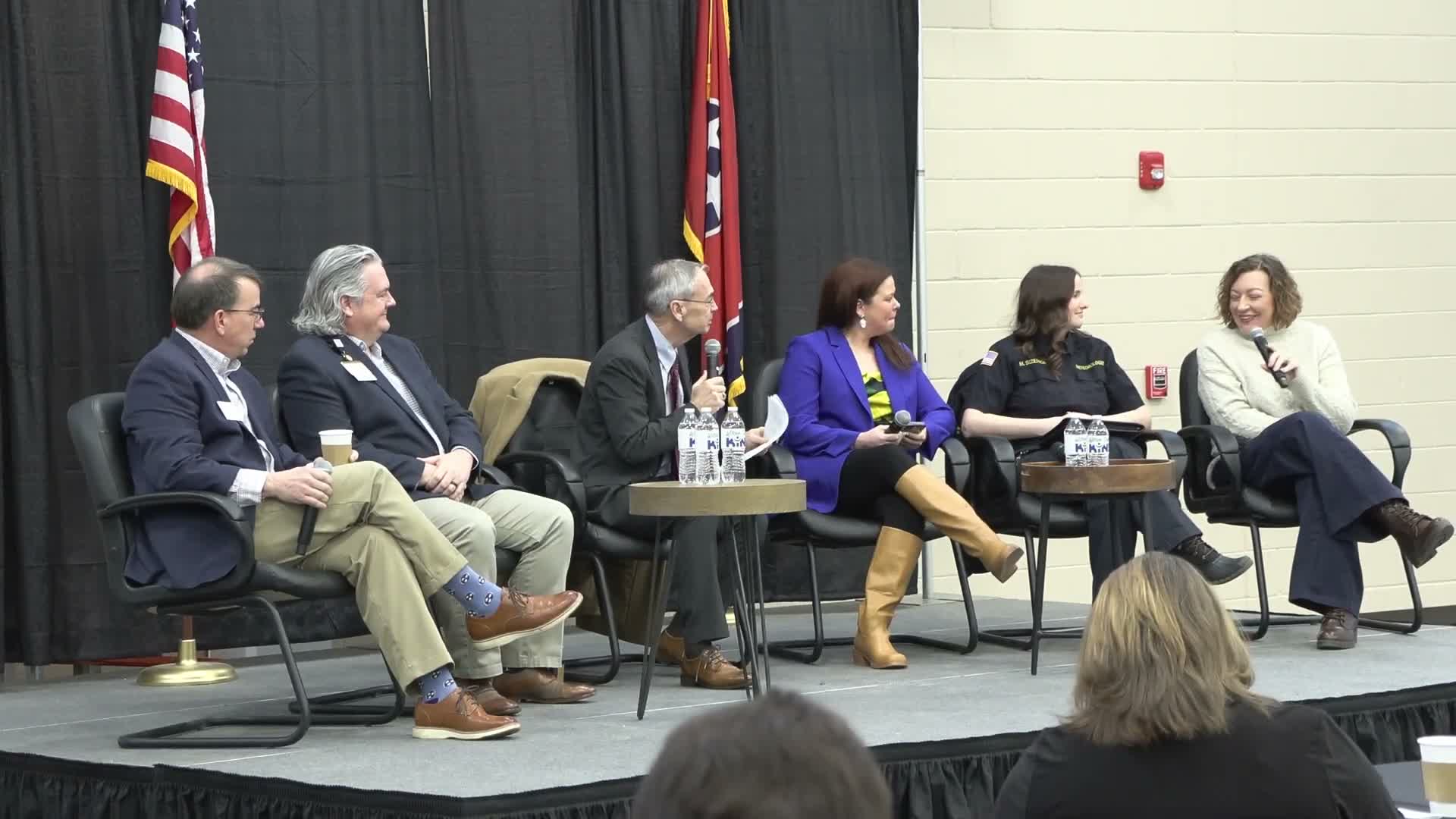
Summary
Wilson County Mayor Randall Hutto convened emergency managers, volunteer leaders and Vanderbilt medical partners to explain how the county coordinates life‑saving response, volunteer deployment and recovery after events such as the March 2020 tornado and a recent ice storm.
Wilson County Mayor Randall Hutto convened a public panel to explain how county, state and nonprofit partners coordinate immediate response and long‑term recovery after severe weather and other disasters.
The event at the Made In Tennessee Building brought representatives from the Tennessee Emergency Management Agency (TEMA), the Wilson County Emergency Management Agency (WEMA), Volunteer Network and Tennessee VOAD, and medical partners from Vanderbilt University Medical Center and Vanderbilt Life Flight. "We do not self deploy," said Regina Guertin, executive director of Volunteer Network, describing how volunteer groups organize only at the invitation of emergency managers to avoid creating safety hazards or duplicating effort.
Why it matters: Panelists sought to counter misinformation, explain the chain of command in a crisis and tell residents what they can do now to be ready. Kate Amaril, nongovernmental partnerships manager for TEMA, said "Life safety is always the most important," describing how priorities differ between fast‑onset events (search and rescue) and slower incidents (communication and sheltering). Kevin Neuner of Vanderbilt Life Flight described a health‑care resource tracking system—referred to in the panel as "Hertz"—that logs EMS agencies and hospitals so regional partners can see available assets in real time.
What officials said: WEMA emphasized pre‑incident planning and hazard‑specific training, including prepositioning shelters and training personnel in swift‑water, confined space and high‑angle rescue. Panelists said the county has improved communications since the March 2020 tornado by strengthening relationships with ham radio operators and using statewide radio networks when cell service is damaged.
Funding and facilities: Mayor Hutto said leftover funds from the 2020 tornado include a roughly $6,000,000 grant that has been discussed for rebuilding Station 109 and for creating a countywide emergency operations/ training center to support coordinated response and training across agencies.
Volunteer management and safety: Guertin and other volunteer leaders emphasized that volunteers should not self‑deploy into unsafe areas such as locations with downed power lines; instead they should register and coordinate through Volunteer Network or VOAD so their work can be matched to needs identified by EMA. "If we've all coordinated together and planned together, then when an incident occurs, Volunteer Network may organize those volunteers to help with cleanup or recovery needs," Guertin said.
Medical coordination: Kevin Neuner said Vanderbilt Wilson County Hospital operates as a Level‑3 trauma center with 24/7 operating rooms and mass‑decontamination capability. When local resources are strained, downtown trauma surgeons with privileges at the local hospital and regional assets can be redeployed to support triage and care.
Claims about communications: Panelists said communications failures during the 2020 tornado (damaged cell towers) made ham radio and statewide radio networks essential. The panel described ESF‑2 (the state communications emergency support function) and TEMA district coordinators as primary state contacts for telecom restoration and coordination.
Practical advice for residents: Panelists urged residents to keep paper copies of important documents, take photos of damage, keep detailed records of volunteer hours and expenses for possible FEMA/insurance reimbursement, and prepare at least 24–72 hours of supplies and a family communication plan. Pat Lawson noted access to pro bono legal help via TNVOAD for underserved survivors needing assistance with claims.
Next steps: Panelists asked residents to be patient during federal declaration and documentation processes and to contact Volunteer Network rather than self‑deploy. The session closed with a reminder that many of the local recovery efforts are volunteer‑run and funded by sponsors, not county taxes.
The panel did not propose or vote on any new county policy during the session; it served to explain existing roles, capabilities and steps residents and volunteers should follow during recovery.