
City of Dickinson asks Stark County to consider buying armory, back a 1¢ public safety sales tax
Get AI-powered insights, summaries, and transcripts
Subscribe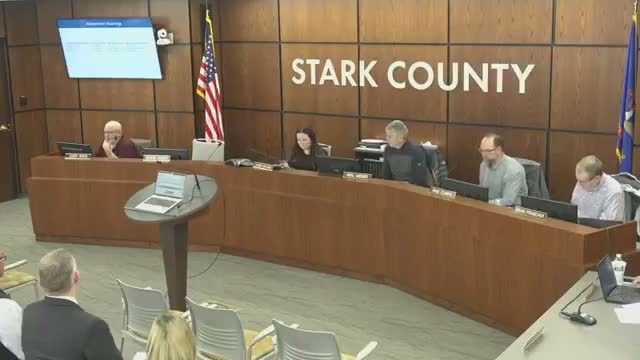
Summary
City of Dickinson proposed selling the Armory and land under the Law Enforcement Center to Stark County for $2.5 million and asked the county to join a proposed 1¢ public safety sales tax on the June ballot, including a draft joint-powers agreement returning 20% of revenue to the county for public safety.
The City of Dickinson asked the Stark County Commission on Feb. 3 to consider buying two city-owned properties and to support placing a 1¢ public safety sales tax on the June ballot.
City representative Dossinger outlined a draft purchase agreement that would offer the Armory and the land under the Law Enforcement Center to the county for $2,500,000, subject to memoranda of understanding guaranteeing continued city use of certain facilities. "We would have a few MOUs that we need to be put in place, prior to sale," Dossinger said, noting the city would seek continued use of the LEC shooting range and an easement for fiber optics used by the museum.
Mayor Scott Decker presented the sales-tax proposal and asked for the county's support in a joint-powers agreement that would return 20% of the proposed 1¢ sales-tax revenue to the county "for the sole purpose of funding County public safety." Decker said the city estimates the 1¢ could generate roughly $7–8 million annually and that Dickinson would receive about $1.4 million at 20% of a $7 million yield. "This is the way we're looking at, possibly the only way with these increased costs going forward," Decker said.
Deputy City Administrator Linda Carlson provided background on current sales-tax allocations and budget pressures, noting declines in gross production (oil) taxes. She presented five-year collections and spending projections as context for the ask.
Commissioners did not take a final vote. Chair Messer said the county would take the request under advisement and schedule next steps, including facility walkthroughs and review of draft MOUs and a purchase agreement. Messer proposed a special county commission meeting Feb. 19 so commissioners could complete due diligence before deciding whether to enter a joint-powers agreement or endorse putting the measure on the ballot.
Why it matters: The sale would transfer property used for public safety and recreation; the proposed sales tax is a county-impacting revenue change that, if adopted by voters, would create a near-term revenue stream earmarked for public safety but requires intergovernmental agreements and statutory timing to place on the ballot.
The commission asked the city to provide corrected drafts of the purchase agreement and MOUs and scheduled walkthroughs so staff can perform environmental and facility assessments during the county's due-diligence window.