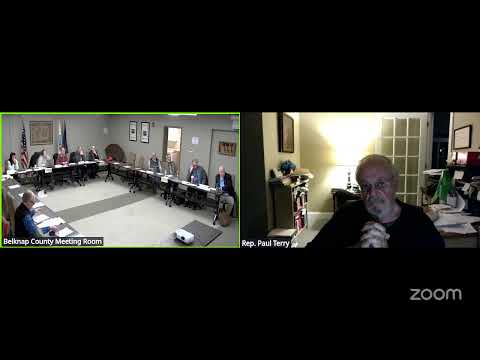
Belknap County delegation adopts 2026 budget after amendments, sets levy to raise $23.37 million
Loading...
Summary
Belknap County delegation voted to adopt an amended 2026 budget that applies $2 million from fund balance, cuts capital improvements and adjusts outside-agency funding; the final roll call was 11–2 in favor, with the expected tax impact around a 4.4% increase.
The Belknap County delegation voted to adopt an amended 2026 county budget on a final roll call of 11–2, approving a package that applies $2 million from the county’s fund balance and raises $23,372,776 through property taxes, a figure members said equates to roughly a 4.4% tax increase.
The amended budget reduces the capital improvements line from a committee-recommended figure near $791,769 to $700,000 following debate and a successful amendment. County Commissioner (speaking to the delegation during debate) told members that roughly $300,000 of the original capital request was for nursing-home work and that some repairs at the jail were necessary to maintain safety and sanitation. A delegation member in favor of the cut said constituents pressed for fiscal restraint; another argued that cutting the capital pool risks worsening safety and facility problems.
The delegation also debated funding levels for outside agencies. A motion to restore several agencies to the county commissioners’ recommended funding — including the University of New Hampshire Cooperative Extension, the Belknap County Conservation District, Community Action Program and Lakes Region Mental Health — generated extended discussion about taxpayer impact. Delegates repeatedly framed the trade-off as a small per-property increase (members calculated roughly $2 on a $300,000 home for some amendments) versus program benefits such as grant leverage and services to vulnerable residents.
During debate over the UNH Cooperative Extension, multiple competing motions were made to increase or modify the extension’s funding level; members asked to vote on items individually because of numerical complexity. A later roll-call on a specific UNH increase was recorded as 10–3 (motion failed in that instance); other UNH-related motions were taken separately before the final budget vote.
Public commenters objected to the timing of the formal public-input period, saying the delegation voted the budget before the public could comment. Resident Rick DeMarco asked the chair to “go on record” that the delegation had passed a $23 million budget without public input; Representative Bogart and others replied that public testimony had been solicited earlier during subcommittee meetings and made available on YouTube. A 4‑H volunteer, Rebecca Boyce, said cuts to outside-agency support harm local programming and expressed concern that public comment occurred after the decision.
The chair read the final numbers into the record before the vote, including the to-be-raised-by-taxes figure and the revised tax-rate impact. After the roll call confirmed adoption, the delegation moved to the public-input period and then to several remaining agenda items, including a discussion of interdepartmental transfer authority, which members left for a future meeting.
Next steps: the delegation’s adopted budget will be transmitted as required by county rules; members said they may revisit transfer-authority language in a future session.