
Parole panel revokes several paroles, assigns treatment for one and preserves others after daylong hearings
Get AI-powered insights, summaries, and transcripts
Subscribe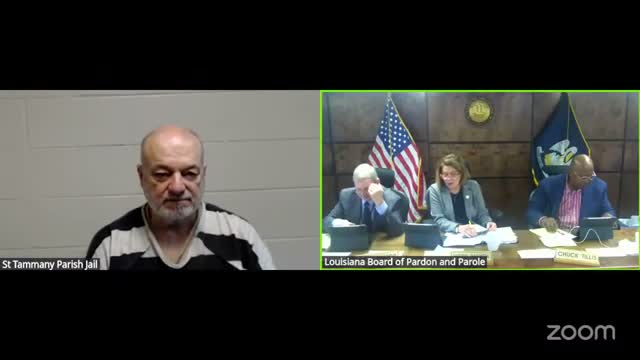
Summary
On Feb. 5, 2026 the Committee on Parole heard revocation cases from multiple parish jails. The panel revoked parole in multiple files for absconding or new criminal charges, assigned one man to a recovery program instead of revoking, and declined revocation in several other cases.
BATON ROUGE — The Committee on Parole met by video from DOC headquarters and remote parish jails on Thursday, Feb. 5, 2026, and issued a series of revocation decisions after hearings in several files.
The panel — chaired by Cheryl Bonanza and joined by board members Chucky Tillis and Steve Prater — revoked parole for multiple people whose files included allegations of absconding, new criminal charges or failure to comply with monitoring and payment requirements. Bonanza said in one case, “My vote today is gonna be to revoke your parole,” when explaining the panel’s decision to remove supervision for a person who failed to report and did not have a GPS monitor installed as required.
Votes at a glance
- Vernon Orange (DOC 18O943): Revoked. Chair Bonanza cited absconding, failure to live at the required address and failure to fit a GPS monitor. The panel voted to revoke after Orange pleaded guilty to location/monitor violations and offered a personal statement. (See timeline: SEG 085–371.)
- Martin Brown (DOC Fifth81224): Revoked. The panel found criminal activity reflected in an amended domestic abuse battery charge and revoked parole following counsel’s description of case history and a victim statement on file. (SEG 413–566.)
- Leopold Charles "Chuck" Lacoste II (DOC 478688): Revoked. Allegations included leaving the state without written permission and new criminal charges alleging theft/exploitation of an infirm person and a protective-order violation; the panel held an executive session and revoked parole based on a finding that Lacoste left the state without permission. (SEG 774–1164.)
- Bridal Landry (DOC number on record): Revoked. Landry was found in violation after recent arrests and a record of missed supervision payments; the panel voted to revoke. (SEG 1212–1328.)
- Brandon Green (DOC 493022): Revoked. Green’s counsel pointed to a jury acquittal on a firearm charge and a sister’s sworn trial testimony that she placed the weapon in the vehicle, but the panel found a violation for criminal activity and revoked parole. (SEG 1366–1634.)
- Jairus Palmer (DOC 579468): Not revoked. After testimony from community advocates, program leaders and counsel disputing aspects of a domestic allegation, the panel voted not to revoke and urged Palmer to avoid risky situations. (SEG 1656–2060.)
- Loyan White (DOC 10347): Not revoked; special condition imposed. The board voted not to revoke White’s parole and required placement in the Cotton Brook Cove recovery/reentry program as a special condition, citing his medical needs and the program’s capacity to address treatment and housing. The panel and defense counsel discussed program eligibility and bed availability before the vote. (SEG 2104–2646.)
- Brandon Winston (DOC 554877): Not revoked. Winston denied knowledge of a weapon in a car and said he performed a brief burnout; the district attorney declined felony charges and the board issued a stern warning but did not revoke parole. (SEG 2650–2786.)
What mattered in the hearings
Panel decisions turned on three main factors: (1) whether new criminal charges reflected conduct that met the board’s threshold for revocation, (2) whether supervision violations were technical (for example, a single trip out of state with or without written permission) and (3) mitigation, including medical conditions, family circumstances and community supports or treatment placements. Defense counsel in several cases emphasized medical issues, caregiving responsibilities or that family members used players’ cards or accounts; the board repeatedly distinguished those mitigating facts from violations that justify revocation.
Next steps and procedural notes
When the panel revoked parole, members said the person could reapply for release in the future subject to board rules and calculation of time served. In the case where the board imposed Cotton Brook Cove as a condition, the panel and counsel noted the program’s role in treating substance-use needs and housing while accommodating certain registry or medical issues.
The Committee on Parole convened multiple remote sites during the morning and late morning sessions and recessed for executive sessions where confidential matters required it.