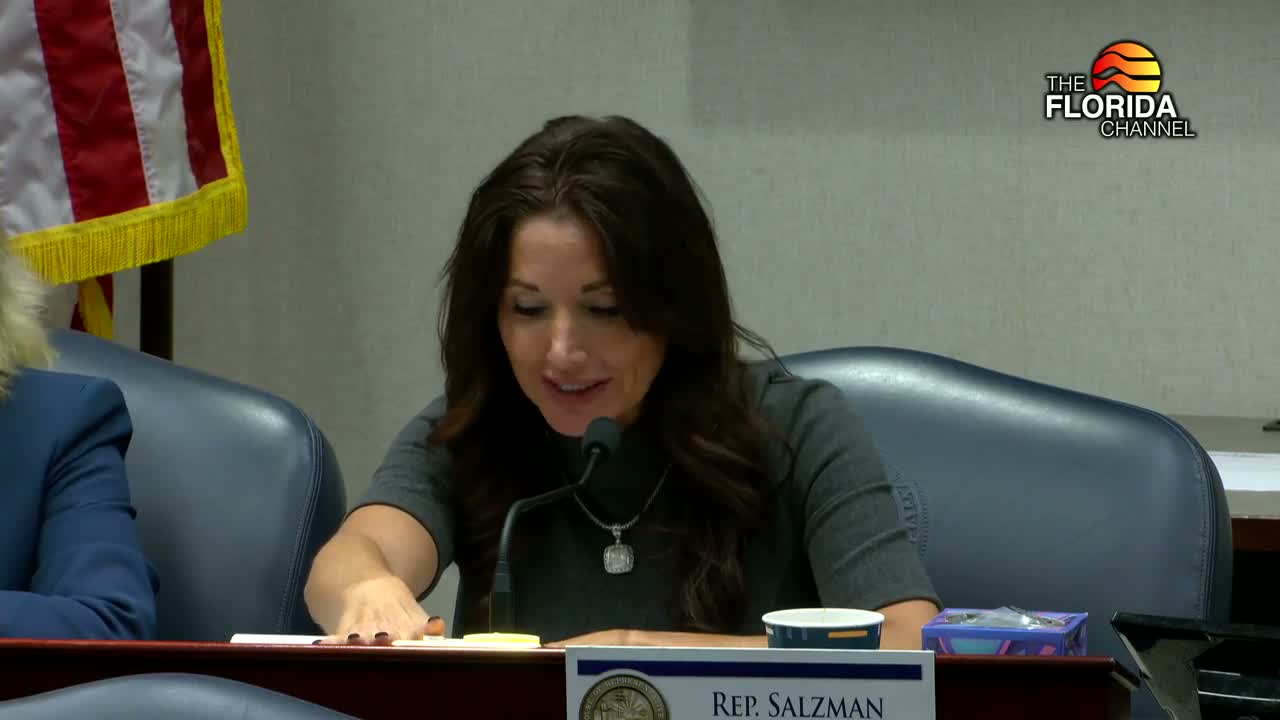
Subcommittee advances bill tying state incentive eligibility to employer labor practices amid heated testimony
Loading...
Summary
HB 1387, conditioning Department of Commerce incentives on employer labor practices such as card‑check recognition, was reported favorably after extended public testimony from union representatives, construction trades workers, and proponents who said the measure protects secret‑ballot elections.
Representative Oberdorf introduced HB 1387, the "taxpayer dollars protect workers act," saying the measure clarifies state incentive rules tied to Chapter 288 and refines the definition of "employer." The sponsor said the bill is intended to ensure that incentives awarded by the Department of Commerce do not effectively coerce a method of union recognition.
The hearing included extended public testimony from opponents and proponents. Michael Grennan, a technician from Merritt Island, argued HB 1387 "intrudes into areas already governed by federal labor law" and warned the bill would use taxpayer dollars to discourage federally protected organizing activity. Construction‑trades speakers including Shane Tremblay and Theresa King said the bill could harm registered apprenticeship programs and small contractors that rely on union labor and voluntary arrangements.
Proponents such as David Osborne (Workers for Opportunity/Commonwealth Foundation) said the bill defends secret‑ballot elections and democratic unionization, noting that card‑check and neutrality agreements have higher recognition success rates in organizing drives and that the bill encourages employers to seek secret ballots.
Members debated the bill's effect on apprenticeship programs and whether the state should limit incentives tied to private employer practices. Sponsor Oberdorf said the bill is narrowly targeted to Department of Commerce incentive agreements and asked for favorable consideration. The subcommittee recorded the bill as reported favorably; the transcript includes a roll call but does not present a summarized numerical vote total.