
Springfield council rejects one-time waiver of small rehabilitation recapture agreement
Get AI-powered insights, summaries, and transcripts
Subscribe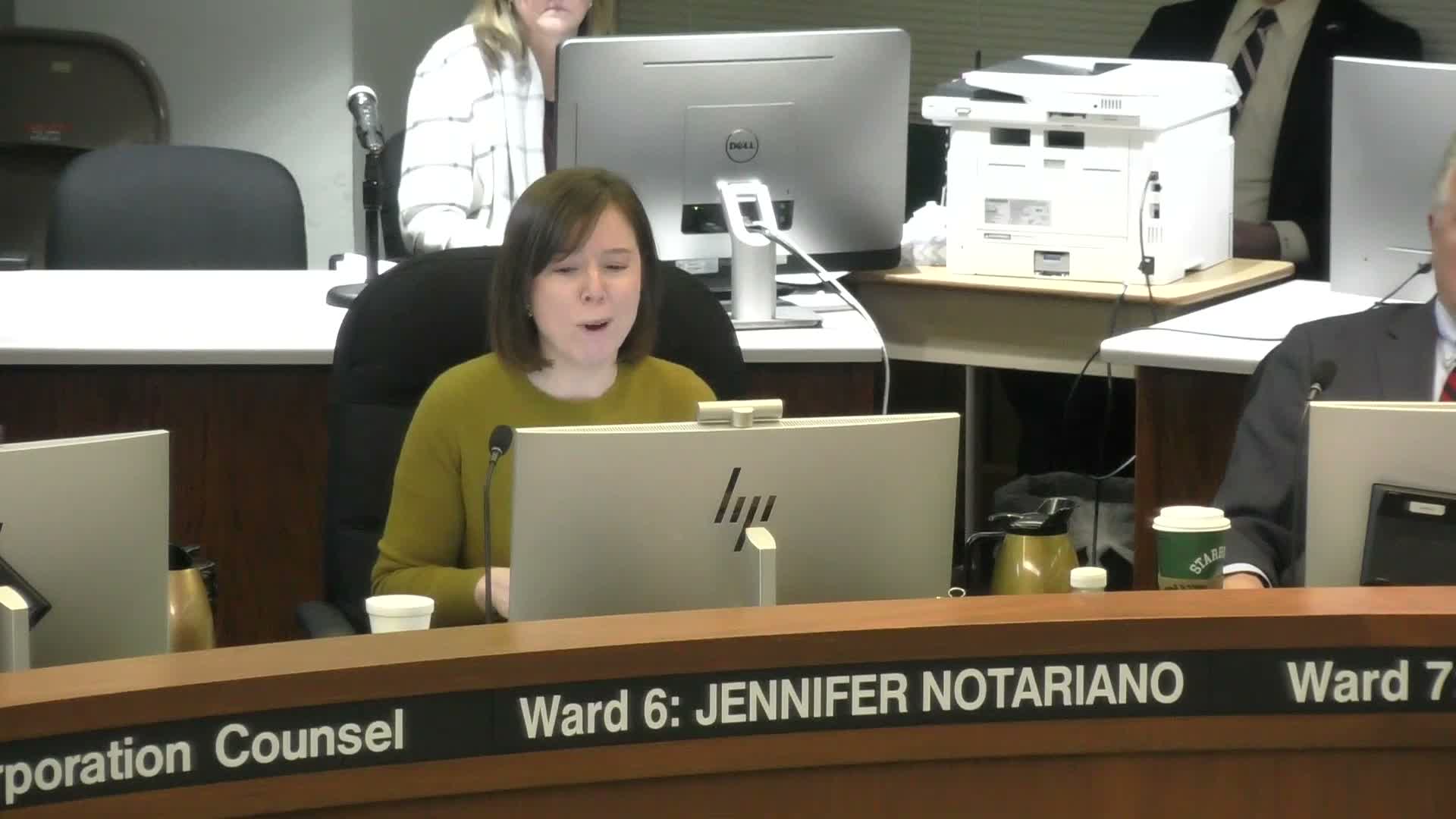
Summary
The council debated and narrowly rejected a request to waive a recapture agreement for a homeowner’s roughly $3,000 repair, with proponents citing administrative cost and humanitarian concerns and opponents warning about precedent; the motion failed 4–6.
Alderman Notriano urged the Springfield City Council to waive a recapture agreement for a homeowner who paid for emergency water-line repairs and now faces a roughly $3,000 recapture obligation, saying enforcement would cost more in staff time than the amount to be recovered.
Supporters framed the vote as a narrow humanitarian request. ‘‘He’s $3,000 in. I’m sure his work cost more than that,’’ Alderman Gregory said, arguing the waiver would help a long-time resident who has been unemployed. Alderman Conley, who sponsored the city’s homeowner incentive program, described the policy’s purpose as neighborhood stabilization and said the program has been used 14 times, making it one of the city’s most-used incentive programs.
Opponents cautioned about precedent and administrative burden. The mayor noted that since taking office the city has 77 recapture agreements totaling $397,286 and warned that routinely granting waivers could prompt many similar requests. Corporation Counsel said the council has the authority to waive individual recapture obligations and that legislative immunity would likely protect the city from suits, but also noted the program language remains in contracts unless the council changes it.
Council members debated whether to rewrite program rules to set a dollar threshold for clawbacks rather than adopt case-by-case waivers. Several members volunteered to work with corporation counsel on a consistent threshold and revised program language.
When the mayor put the waiver to a vote, the ordinance to waive the recapture agreement failed, with 4 voting yes and 6 voting no.
The council indicated it will consider drafting ordinance language to establish a consistent clawback threshold and invited staff and counsel to bring proposals back for review.