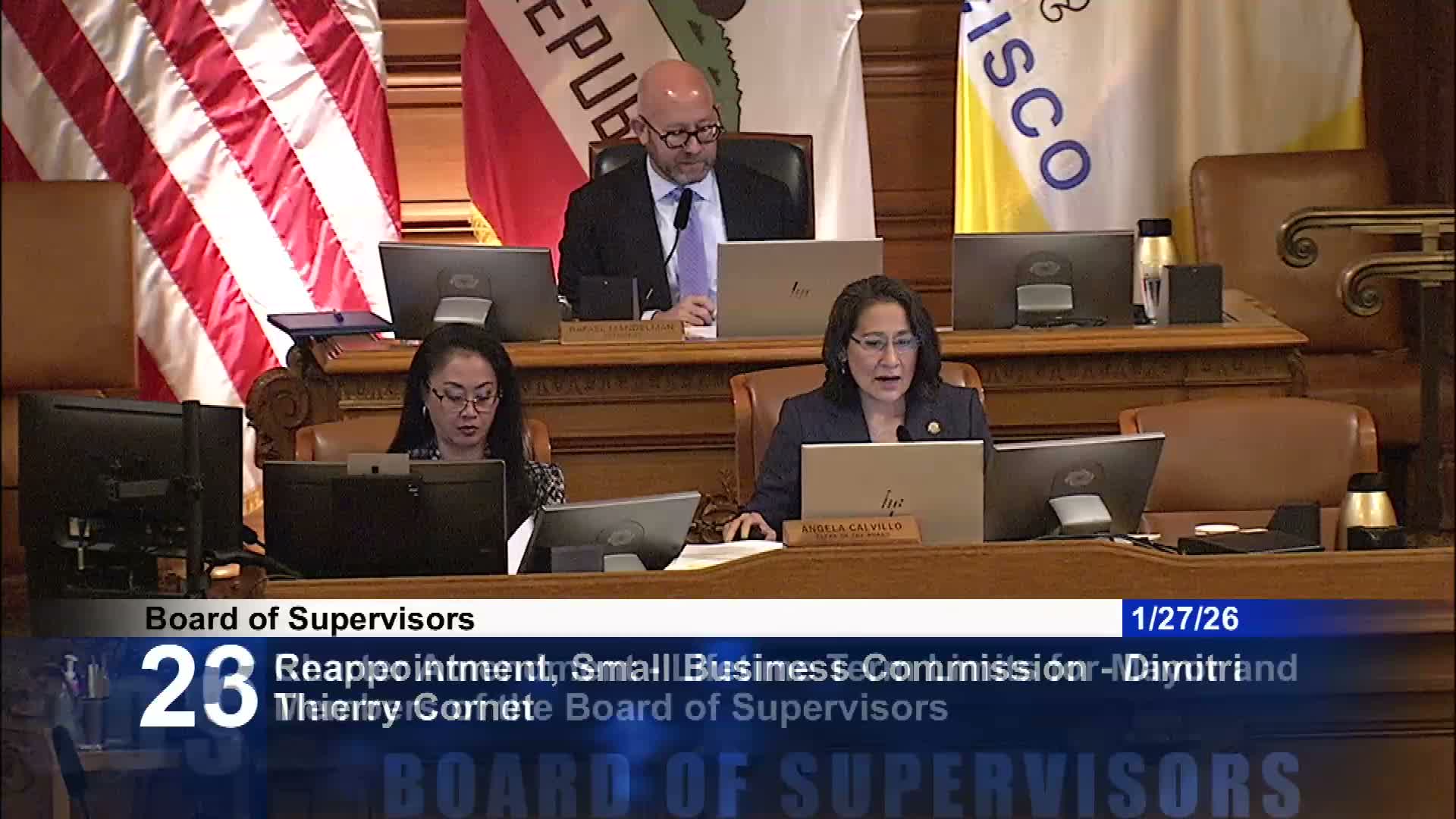
Board deadlocks on broadening term-limit changes; charter amendment continued to Feb. 3
Loading...
Summary
Supervisors debated a charter amendment to convert existing consecutive two-term limits into lifetime two-term limits for mayor and supervisors. An amendment to expand limits to other elected offices failed 4–7; the underlying charter question was continued to Feb. 3 for further consideration.
The San Francisco Board of Supervisors spent the afternoon debating a proposed charter amendment that would convert current consecutive two-term limits for mayor and supervisors into lifetime two-term limits and close what the sponsor called a loophole that allows officials to run again after a break.
Sponsor Supervisor Joel Mahmoud framed the proposal as an effort to "close the loophole" and to "provide an opportunity for the next generation of leadership," saying the change would preserve the intent of existing term limits while preventing long incumbencies. Supporters cast the amendment as a step toward generational turnover in city government.
Opponents said the move was unnecessary or premature. "This is a solution in search of a problem," Supervisor Walton said in urging broader changes to apply lifetime limits to many more offices. Walton offered an amendment to extend lifetime two-term limits to other elected positions — including assessor-recorder, city attorney, district attorney, public defender, sheriff, treasurer and certain board seats — arguing it would create broader opportunities for people with specialized skills.
The board voted on Walton's amendment by roll call; the motion failed, recorded in the clerk's tally as 4 ayes and 7 nos. After additional procedural discussion the board then voted to continue consideration of the charter amendment to Feb. 3, 2026; that continuation passed on a roll call recorded as 8 ayes and 3 nos.
Supporters including Supervisors Melgar and Mahmoud emphasized the amendment’s symbolic and pipeline effects for younger leaders, while others — including Supervisor Chan, Dorsey and President Mandelmann in remarks — questioned whether the change would produce the intended outcomes or whether it warranted broader vetting with stakeholders. Supervisor Dorsey said he would support the original, narrowly tailored amendment, noting distinctions between legislative and specialized departmental offices.
The item was not decided today; the board deferred final action to the Feb. 3 docket so members can pursue further vetting and potential edits. The record shows the Walton amendment failed and the charter amendment will return for further committee or floor consideration.