Public commenters split as committee debates SEPA exemptions: developers push speed, residents and environmental groups warn of gaps
Loading...
Summary
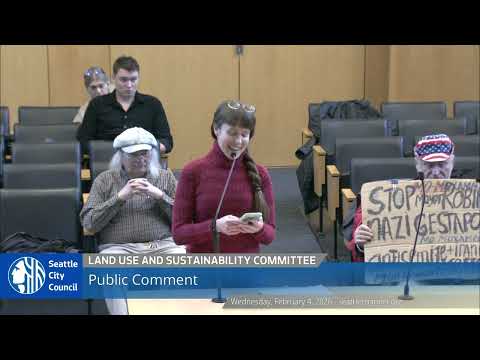
At the Feb. 4 Land Use Committee meeting, developers and trade groups urged streamlining SEPA to speed housing production while environmental groups, residents and watershed advocates warned the FEIS and code gaps leave risks for trees, stormwater and cultural resources.
Developers, trade associations and affordable‑housing builders told the Seattle Land Use and Sustainability Committee on Feb. 4 that raising SEPA categorical‑exemption thresholds would cut permitting time and costs and help deliver housing more quickly. Opponents — neighborhood residents, watershed and tree advocates, and some residents — said the proposed exemptions would leave gaps in environmental review, citing tree‑canopy loss, increased impervious surface, and potential harm to salmon habitat.
Supporters: Patrick Foley of Lake Union Partners said removing SEPA for housing would reduce project timelines. Logan Schmidt of the Master Builders Association told the committee that "project level SEPA review is largely redundant" because environmental impacts are addressed through the comprehensive plan, the Growth Management Act, and detailed code requirements such as the critical areas ordinance and stormwater standards. Ryan McKisser of Habitat for Humanity said streamlining permits would help serve more families sooner.
Opponents: Steve Rubstello told the committee that claims developers make about cost pass‑through are false, saying, "Lowering the cost to developers lowers the cost of housing. That's a pure lie in Seattle." Tree Action Seattle warned that reducing thresholds could allow large projects to avoid environmental review — for example, a token ADU could exempt a 30,000-sq.-ft. project — and urged strengthening parking and other exemptions. Ruth Williams of the Thornton Creek Alliance cited pre-spawn salmon mortality and said policy should not accelerate canopy loss and stormwater impacts.
Research and evidence claims: Several public commenters referenced studies and EIS findings. Jennifer Godfrey cited a UCLA study (Storper) arguing deregulation does not increase affordability and described concerns that the FEIS underlying the 1 Seattle plan may be flawed and is under appeal. June Blues (remote) also told the committee the FEIS "is deeply flawed and under appeal," and asked the council to limit long‑term reliance on that EIS for exemptions.
Staff response and mitigation: SDCI staff acknowledged tradeoffs and described targeted code updates to "plug gaps" identified in the FEIS, including new requirements for transportation studies in lower‑density areas, expanded cultural‑resource protections (early-site monitoring and excavation protocols), and a tribal‑notification program that would designate a liaison and provide query-driven permitting reports for tribal partners.
What happens next: The committee adopted amendments (including a reduced parking exemption) after hearing the mixed public comment, and then unanimously recommended both bills to the full council. Residents and environmental groups who spoke said they will continue advocacy during the council process.