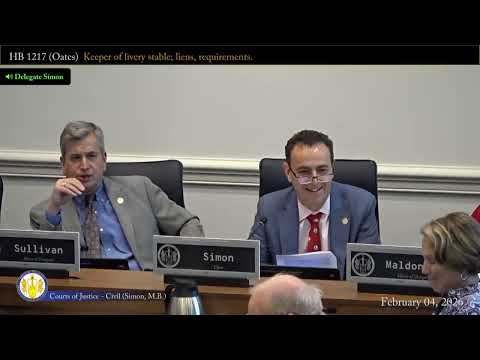
Subcommittee advances uniform consumer-debt default-judgment bill after hours of debate
Loading...
Summary
The civil law subcommittee voted to report a substitute for HB 444, the Uniform Consumer Debt Default Judgments Act, after testimony from consumer advocates and the debt-collection industry. Supporters said enhanced pleading will help unrepresented defendants; opponents warned of operational burdens for courts and certain creditors.
The House Courts subcommittee reported a substitute for HB 444 — the Uniform Consumer Debt Default Judgments Act — after a lengthy hearing with advocates, industry groups and community association representatives. The substitute requires plaintiffs seeking default judgments in consumer-debt cases to include more specific pleadings and documentary evidence before a court may enter judgment.
Supporters, including Joanna Darkus of the Virginia Poverty Law Center and Ishan Kalra of the Pew Charitable Trusts, said the change is meant to reduce erroneous default judgments against unrepresented defendants. "When people participate in their cases, they're more able to have their inaccurate cases resolved," Kalra said, noting studies showing widespread confusion among consumers sued for debt. David Reed of the Receivables Management Association International told the committee the bill is consistent with industry best practices and encouraged a yes vote.
Opponents — including representatives of community associations and the Virginia Creditors Bar Association — cautioned that the new documentation requirements could impose costs and procedural burdens, particularly on small creditors and homeowners associations. Pia Trigiani, who represents community associations, said the bill "adds steps to a well established collection process" and warned that increased costs would ultimately be borne by homeowners.
Sponsor Delegate Doug Simon said the substitute strikes a balance by requiring basic items (consumer name and address, last four digits of an account identifier or other identifier, date and amount of last payment, documentation sufficient to demonstrate the debt and chain-of-title where applicable) while allowing catch-all records where written agreements do not exist. He emphasized a delayed enactment in the substitute to give courts and stakeholders time to adapt.
The subcommittee adopted the substitute, added enactment language to delay effective date to July 1, 2027, and voted to report the bill (substitute reported 7–1). The sponsor said the delay is intended to let the Office of the Executive Secretary and the district-court committees study implementation and return recommended changes by November 1, 2026.