Senate committee advances bill to curb climate-related litigation against fossil-fuel companies
Loading...
Summary
The committee passed the Energy Security and Independence Act, which sponsors say would shield lawfully operating fossil-fuel companies from certain climate-related lawsuits; supporters framed it as protecting energy reliability, while opponents raised concerns about restricting landowners' remedies and lowering industry incentives.
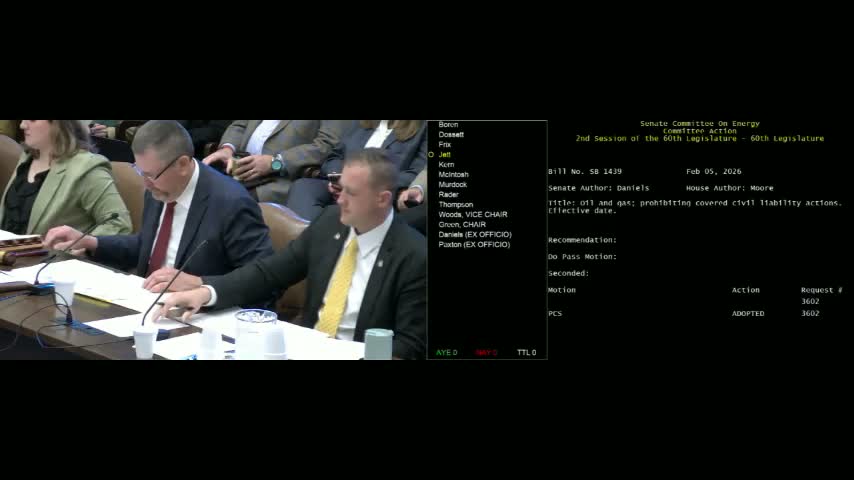
Senator Daniels presented the Energy Security and Independence Act (Senate Bill 14 39), saying the bill is intended to address what she described as an increase in "climate lawfare" in other states and to protect companies in the fossil-fuel sector that are operating within permits and regulatory requirements. Daniels said the bill does not protect unlawful actors and that it focuses on claims alleging climate-change damages rather than violations of environmental or worker-safety laws.
During committee questioning senators pressed the author on the scope of the shield. One senator asked whether the bill would extend protection to non-fossil energy sectors (wind, solar, nuclear); Daniels answered the bill is specific to fossil fuels—natural gas, oil, coal, LPG and related refined products. Other senators expressed concern the bill might limit property-rights remedies if contamination or negligence occurs, with a line of questioning focused on whether landowners could be prevented from seeking full judicial recovery for proven harms.
Daniels and supporters responded the measure is meant to be proactive against a nationwide trend of suits they describe as targeting lawful energy operations; she emphasized the bill excludes unlawful conduct and regulatory violations. Opponents said shielding this category of lawsuits risked lowering the bar for best practices and could disadvantage operators who voluntarily exceed minimum standards.
After closing remarks invoking energy reliability and affordability, the committee held a roll-call vote. The committee advanced the bill by a recorded vote of 10 ayes and 1 nay.
What’s next: The bill was reported out of committee and will move through the normal legislative process; sponsors indicated they intend the measure to serve as a model for other states and to protect in-state energy production.