Pennington County sheriff reports new federal and forest service funding, proposes 3% wage increase for deputies
Loading...
Summary
Sheriff Brian Mueller told commissioners Feb. 3 that recent meetings with federal and U.S. Forest Service representatives produced increased funding — including a $35,000 law‑enforcement contract payment — and proposed a 3% across‑the‑board wage increase for county law enforcement. Commissioners asked staff and HR to vet costs and deferred a vote.
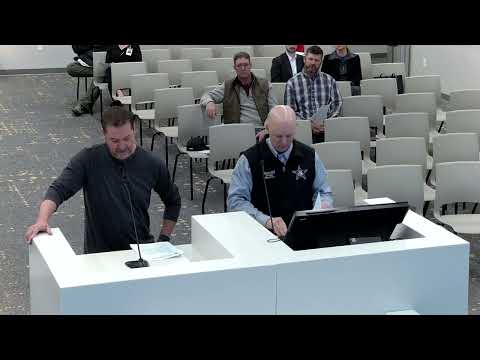
Pennington County Sheriff Brian Mueller told the county commission on Feb. 3 that recent meetings with federal and U.S. Forest Service representatives produced new money for local law enforcement and public‑lands operations and outlined a proposal to raise starting wages to improve recruitment and retention.
"The Forest Service a couple of weeks after the meeting did find some additional funding for us to fully fund our law enforcement contract in the Forest Service at $35,000," Mueller said, calling the amount a notable increase the county has not seen in about a decade. He said the funding will support UTV patrols in western Pennington County, trail protection and expanded boat patrols on county lakes.
Scott Guffey, who spoke with Mueller during the presentation, reported additional natural‑resource and infrastructure grant successes: about $80,000 in noxious‑weed infrastructure funding and $20,000 from the Rocky Mountain Elk Foundation to expand seasonal crews, and renewed access to Title II funds that staff estimate at about $300,000 and that could fund on‑the‑ground projects.
Mueller also pressed the board to consider a modest compensation adjustment. "What I would propose is that you ask Jordan to work with me to redo the law enforcement wage scale to add 3% across the board for a cost of living on the wage scale," he said, presenting a countywide fiscal estimate of roughly $134,000 to implement the change immediately for six months and roughly a quarter‑million annually if enacted for a full year.
Commissioners acknowledged the recruitment and retention pressures Mueller described — he said the office lost several deputies last year primarily for pay reasons and that training a deputy can take about nine months — but they hesitated to change the budget mid‑year. Commissioner Rosknecht said he supported taking action but preferred staff, including HR and the commission office, to review the numbers and return with a vetted plan. Another commissioner said they were more comfortable considering changes in the fiscal‑year 2027 budget process.
No motion to adopt the raise was seconded; the board agreed to have Mueller and county staff refine the proposal and return with cost‑and‑funding options for a future meeting. "I'm gonna work through some strategies, some long‑term cost‑saving strategies that are gonna make this make sense, and I'll bring that back at the next meeting," Mueller said.
Next steps: county administration and HR will work with the sheriff's office on a revised wage scale proposal and present more detailed fiscal options at a future meeting.