Get Full Government Meeting Transcripts, Videos, & Alerts Forever!
Get email alerts on the Legislation Erpo topic
No spam. Unsubscribe anytime.
Senate advances bill expanding who can seek extreme-risk orders after heated debate over due process and institutional filings
Summary
After hours of debate and multiple failed and adopted amendments, the Colorado Senate voted to advance Senate Bill 4 — which would allow institutions such as schools, health facilities and certain co-responders to file extreme risk protection order petitions — to third reading. Supporters said the change would save lives; opponents warned of constitutional and privacy risks.
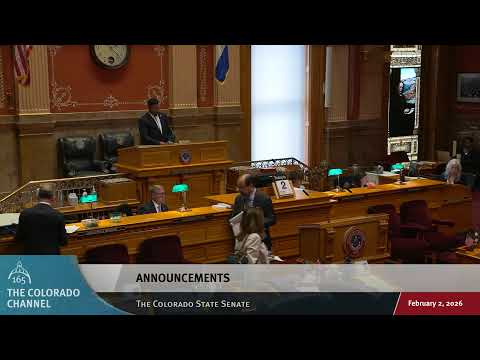
Senators on Feb. 2 advanced Senate Bill 4 on second reading after extended debate over whether to let institutions petition courts for extreme risk protection orders (ERPOs). The measure, sponsored by Senator Suzanne Sullivan (Senator Sullivan), would expand who may initiate temporary ERPOs to include institutional petitioners such as schools and certain health and behavioral-health institutions. The Senate adopted several technical amendments but rejected multiple proposed safeguards meant to limit institutional anonymity, restrict petitioning timeframes, or bar certain petitioners.
The sponsor described the measure as a narrow, life-saving adjustment to an existing law. "We continue to save lives as this state struggles with the public health crisis that is gun violence," Senator Sullivan said, citing testimony from research centers and medical institutions who supported broader ability to file in urgent cases. She emphasized that the bill does not itself appropriate funds and that existing forms require a petitioner’s signature and affidavit.
Opponents argued the change shifts sensitive judgment from trained professionals to institutions and risks violating due process, privacy protections such as HIPAA, and Second, Sixth and Fourteenth Amendment guarantees. "This expansion will deepen rifts," said Senator Zamora Wilson, who called the bill "an overreach" and warned that widening the pool of petitioners could produce false or retaliatory filings, higher administrative costs, and chilling effects that deter people from seeking mental-health care.
Lawmakers focused on several contested issues in amendments: one proposal would have required institutions to disclose the identity of the staff member who initiated a petition; another would have required institutional petitions to be endorsed by at least three institutional members; other amendments sought to remove health-care facilities or schools from the institutional-petitioner list; another would have limited the window for filing a temporary petition to within 10 days of the petitioner's last contact with a respondent. Supporters of those changes argued they add accountability and limit misuse; opponents said the statutory forms and perjury penalties already require petitioner identification and that added constraints could limit life-saving actions. The Senate adopted technical corrections (amendments L012, L014, L019) but defeated L001 (identity disclosure), L3 (three-member endorsement), L15 (strike health facilities), L004 (10-day filing window), L006 (bar petitioners with documented domestic-violence history), and L010 (bar assaultive parties from petitioning).
Senators also debated fiscal and operational impacts, including court workload, law enforcement time to serve orders, gun-storage costs, and potential litigation. Proponents cited research that ERPOs can prevent suicides and other violence; opponents disputed fiscal assumptions and asked for additional analysis. The committee of the whole reported the bill passed on second reading and it was ordered engrossed and placed on the calendar for third reading and final passage.
Next steps: the bill is expected to return for third reading and a final passage vote. Amendments adopted on second reading will remain part of the text being considered on third reading.