Get Full Government Meeting Transcripts, Videos, & Alerts Forever!
Get email alerts on the Housing topic
No spam. Unsubscribe anytime.
Senate advances SB1 to give local governments more tools for middle-income housing; amendments adopted
Summary
On second reading the Senate adopted amendments to SB1, a bill that gives counties, municipalities and housing authorities new options to support housing development; amendment L013 (sunset on use of ad valorem revenue) failed.
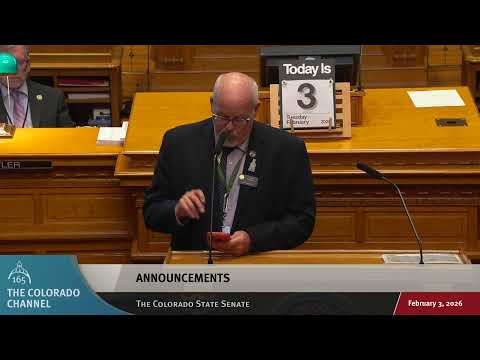
The Colorado Senate on Feb. 2 advanced Senate Bill 1 on second reading, adopting technical and definitional amendments and ordering the bill engrossed for third reading. Sponsor Senator Roberts described SB1 as a voluntary package of tools local governments requested to support housing production and middle-income development.
Two floor amendments (L012 and L014), worked on with the Colorado Housing and Finance Authority (CHFA) and the Department of Revenue, were adopted to clarify recapture provisions and to define transferees for the middle‑income housing tax credit. Senator Roberts said the changes reflect committee work and stakeholder input.
Opponents raised fiscal and principle-based concerns. Senator Bazely said government provision of housing is not the proper role of government and argued regulations increase housing costs. Senator Rich and others asked how using ad valorem (property-tax) revenue could shift burdens to homeowners; Rich offered amendment L013 to sunset use of ad valorem revenue after five years to allow review. Senator Frizzell, reflecting on his experience as a county assessor, described how housing-authority acquisitions can result in property-tax exemptions and urged oversight.
Senator Roberts opposed L013 as inconsistent with local control, noting SB1 is voluntary and pointing to existing ‘smart act’ reporting and housing‑needs assessments that will provide oversight. The L013 amendment failed on the floor. With other amendments adopted, SB1 passed on second reading and was ordered engrossed and placed on the calendar for third reading and final passage.
The bill’s provisions were described as optional tools for counties, municipalities and housing authorities; specific local decisions about funding sources and infrastructure remain for local governments to decide.