Get Full Government Meeting Transcripts, Videos, & Alerts Forever!
Get email alerts on the Military Assault Report topic
No spam. Unsubscribe anytime.
Wyoming National Guard reports drop in sexual-assault reports but warns of readiness risks and medevac cuts
Summary
Adjutant General Greg Porter told the Transportation, Highways & Military Affairs Committee the Wyoming Military Department recorded fewer unrestricted sexual-assault reports in FY25 than FY24, described prevention and victim‑support efforts, and warned the Guard could lose three of six medevac helicopters under an Army restructuring plan.
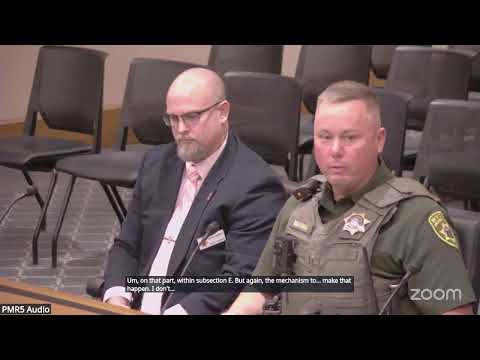
Major General Greg Porter, the adjutant general for the State of Wyoming, reported to the Transportation, Highways & Military Affairs Committee that the Wyoming Military Department saw a year‑over‑year decline in reported sexual assaults but said work remains on prevention, training and force readiness.
Porter told the committee the department continues to support federal missions and domestic operations while coping with hiring shortfalls and the effects of a federal shutdown. He said unrestricted sexual‑assault reports fell from nine in FY24 to six in FY25, of which two were restricted reports, and described the prevention workforce that the department stood up in recent years to provide victim services and training.
The adjutant general emphasized limits on the Guard's investigative authority: "by law, the National Guard is prohibited from investigating sexual assaults," Porter said, and those cases must be investigated by local law enforcement or, where needed, forwarded to the Office of Complex Investigation (OCI) for a determination.
Porter also warned of an equipment and mission risk tied to an Army transformation initiative that reduces medevac companies from 15 to 12 aircraft. "What that meant for Wyoming is we were scheduled right now to lose 3 of our 6, half of our medevac capability in January '26," he said, adding that Wyoming leaders, the governor and federal lawmakers are tracking the decision and the department is exploring options to backfill capability.
Committee members asked for additional data. Representative Geringer requested counts of high‑altitude search‑and‑rescue missions; Porter estimated about 20 over the last year. Porter described program changes aimed at clarifying reporting channels ("no wrong door"), drawing on climate assessments like the DoD Equal Opportunity Survey, and converting lessons from real‑world exercises into training. He said alcohol was present in all four cases the department reviewed this year and noted alcohol reduction remains a training priority.
Public comment underscored ongoing concerns. Retired Major Marilyn Burton told the committee she and other former members see a gap between the department's reports and what troops have told her, criticized implementation of the 2022 laws intended to provide outside avenues for complaints (House Bill 53), and urged broader oversight and revisions to complaint‑handling statutes. "The reports provided by the adjutant general and what I hear from the troops are not in alignment," Burton said.
The committee entered the adjutant general's report into the record and moved on to subsequent agenda items. The department said it will provide additional data on discrimination complaints and continue outreach to community mental‑health centers to connect servicemembers with local resources.
The committee did not take formal action on policy changes during this presentation; follow‑up data and possible statutory adjustments were flagged for future meetings.