
House Labor & Industry committee reports bill to raise minimum wage to $15 by 2029
Get AI-powered insights, summaries, and transcripts
Subscribe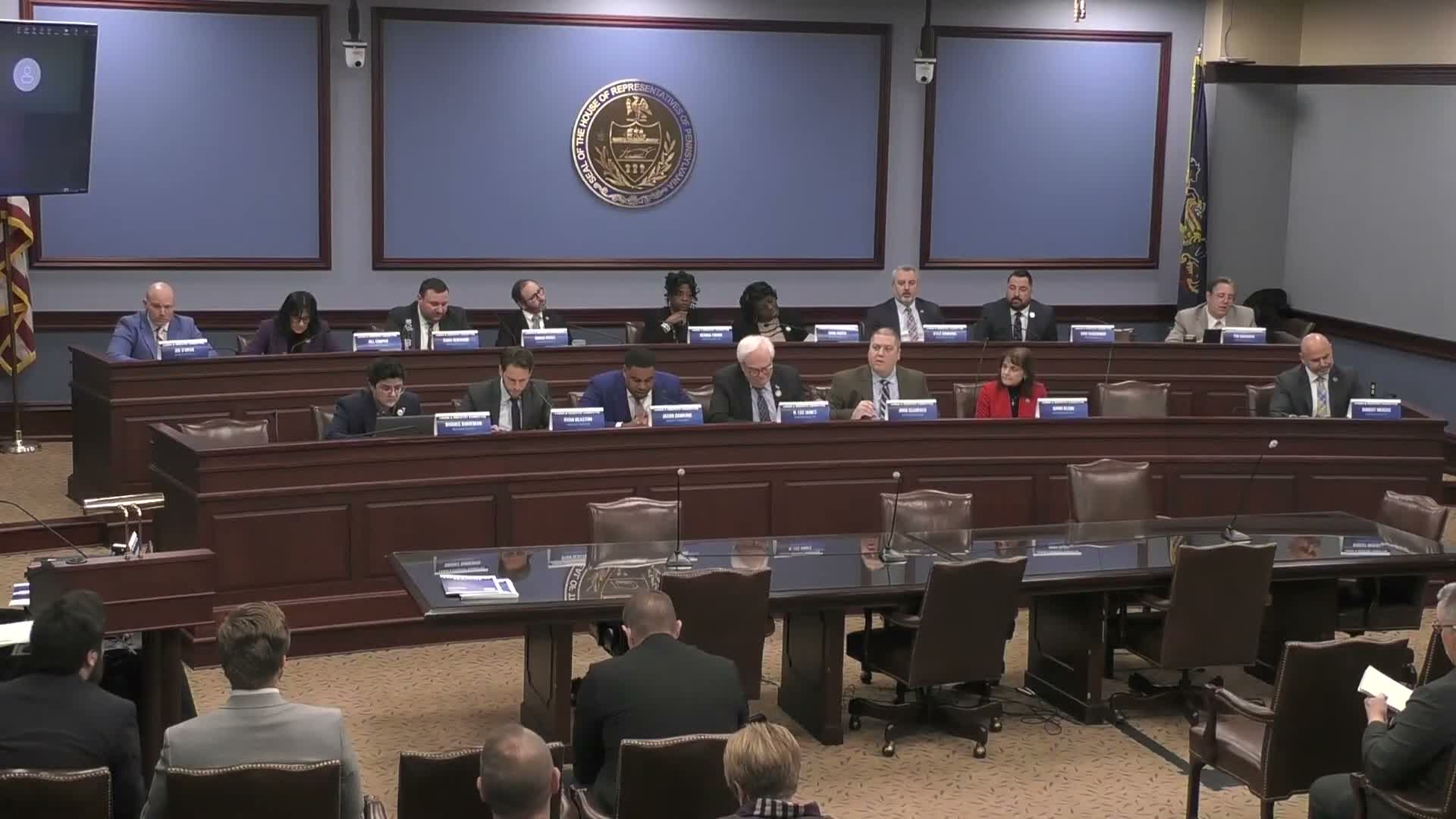
Summary
House Bill 2189, which would raise the statewide minimum wage to $15 by Jan. 1, 2029, require an annual cost-of-living adjustment thereafter and set a tip wage at 60% of the statewide minimum, was favorably reported as committed after two proposed amendments failed in committee.
House Bill 2189 — a proposal to raise the statewide minimum wage to $15 by Jan. 1, 2029, require an annual cost-of-living adjustment thereafter and set the tip minimum at 60% of the statewide wage — was favorably reported as committed by the House Labor & Industry Committee on a roll call vote.
The bill was introduced to the committee by Ryan, who said: "House bill 2189, printer's number 2845, amends a minimum wage act to gradually increase the statewide minimum wage to $15 an hour by 01/01/2029 and require an annual cost of living adjustment to the minimum wage every year thereafter. Additionally, house bill 2189 increases the tip minimum wage to 60% of the statewide minimum wage." The committee considered two typewritten amendments before voting.
Chair Lehi James offered the first amendment to allow employees under 18 to be paid not less than the federal minimum wage and to prohibit employers from displacing existing workers to implement the change. James said the amendment was intended to "ensure that minors entering the workforce will not be priced out of the job market by a government mandate." Representative Green opposed the amendment, arguing that "wages should not differ by age," and the amendment failed on a roll call.
Representative Gleim offered a second amendment to expand the training-wage provision in section 4(e) to workers of all ages for a 90-day period. A committee member with construction-industry experience backed that amendment as consistent with a 90-day standard to test and qualify new hires; the chair urged members to oppose it and the amendment was not agreed to.
During general debate, Chairman Gents cautioned the committee that the proposal is a "fairly aggressive attempt" to change the minimum wage and cited studies he said forecast job losses and higher consumer prices. Representative Green said the current $7.25 hourly minimum is insufficient and argued the state should not continue to delay reaching $15 an hour, saying, "It is 2026, and we remain at $7.25." Representative Clyde countered that market forces have set wages in parts of the state and predicted cost pass-throughs to consumers.
After debate the committee conducted a final roll call. The chair announced, "The bill passes as committed," and stated that "House bill 2189 is favorably reported as committed." The committee adjourned with no further action scheduled in the transcript.
The record in committee shows two failed typewritten amendments (chair James's amendment on under-18 pay and Representative Gleim's 90-day training-wage amendment) and the committee's decision to report the bill favorably as committed. The committee transcript does not specify subsequent floor scheduling or the exact vote tally by total counts beyond the roll-call entries recorded in the hearing.