
Board hears curriculum and special‑services budget proposals; district proposes raising preschool tuition
Get AI-powered insights, summaries, and transcripts
Subscribe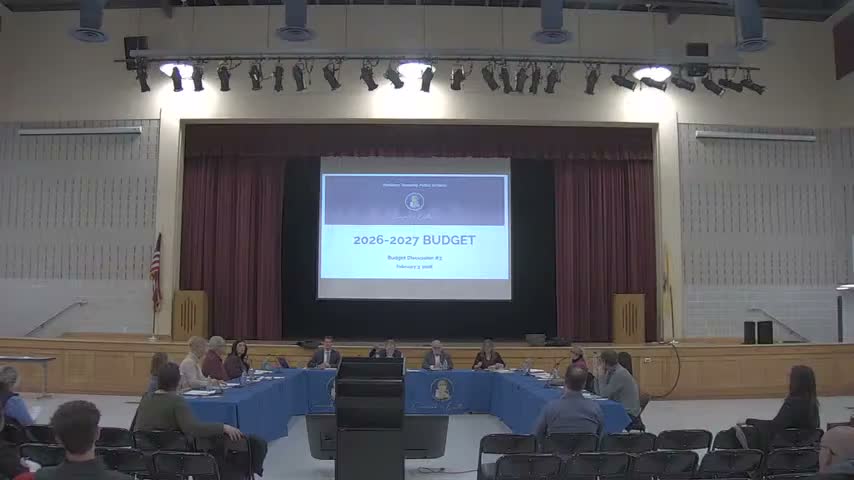
Summary
The board reviewed the curriculum budget (a 4.4% increase driven by IXL Spanish, an Acadience screener and an ATLAS curriculum platform) and a special‑education budget decrease driven by one‑time prior‑year costs; administrators proposed raising integrated preschool tuition from $8,280 to $10,000 for 2026–27 to narrow an operating deficit.
The Marlboro Township Board on Tuesday reviewed detailed departmental budgets in advance of final adoption, focusing on curriculum and special‑education spending and a proposed tuition increase for the district’s integrated preschool.
Curriculum director presented a $1.347 million curriculum budget, a roughly 4.4% increase over the previous year. Key items include adding IXL Spanish (about $35,000) after a world‑language staff retirement, purchasing Acadience literacy screener licenses, and adopting ATLAS, a curriculum management platform the district said will standardize guides and make curriculum documents searchable for families. Administrators said the district used an existing middle‑school teacher to deliver elementary Spanish alongside the IXL platform; they described the change as both cost‑effective and, so far, pedagogically positive. Board members asked about instructional hours, data on student outcomes, and opt‑in/opt‑out mechanics; administrators said Genesys will remain the repository for opt‑in/opt‑out forms and that Atlas will host curriculum documents and pacing guidance.
Special services staff presented a $2.2 million budget — a year‑over‑year decrease of roughly $145,000 (about 6%) they attributed to one‑time costs in the current year (staff training, Chromebook purchases) and the district’s decision to bring occupational therapy in‑house. Administrators emphasized that services for special‑education students will remain intact while the district adds another ERI class and continues to use IDEA funds and extraordinary aid to offset some out‑of‑district tuition costs. The presentation noted roughly $1.0 million in out‑of‑district tuition funded partly from the general fund and about $560,000 from IDEA revenue; administrators cautioned extraordinary‑aid reimbursements historically cover only a fraction of such costs.
On preschool, administrators proposed raising tuition for the integrated preschool at the Early Learning Center from $8,280 to $10,000 for 2026–27, noting the state’s estimated per‑student cost is about $18,000 and the program has operated at a deficit since inception. The district currently serves about 30 families in the preschool with a wait list; administrators said they would consider incremental, fiscally sensible expansion if space and staffing permit, and would examine financial models and potential family supports before taking further steps. Board members asked whether current families would receive a transition discount and requested a breakdown of the costs that produce the estimated per‑student expense.
What’s next: Administrators said they will provide requested breakdowns (IXL cost itemization, field‑testing budget details, preschool capacity and per‑student cost analysis) and bring the full budgets and any tuition changes to later meetings for formal adoption.