Get Full Government Meeting Transcripts, Videos, & Alerts Forever!
Get email alerts on the Ai Data Centers topic
No spam. Unsubscribe anytime.
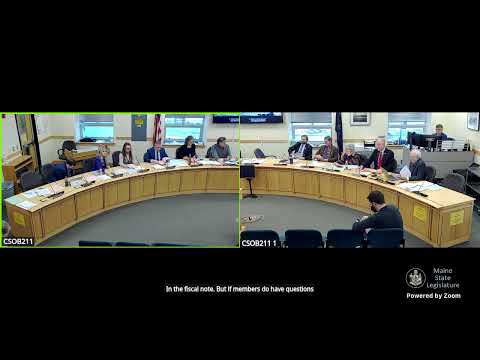
Maine committee hears bill to form AI data-center coordination council amid questions over moratorium, ratepayer risk
Summary
Representative Melanie Sachs introduced LD 307 to create a Maine Artificial Intelligence Data Center Coordination Council to study potential grid, environmental and community impacts from AI data centers. Testimony from DOER, PUC, utilities and advocates urged planning and cautioned about water use, electricity load and incentive structures; the bill would produce a report by February 2027.
Representative Melanie Sachs announced LD 307 in the Joint Standing Committee on Energy, Utilities and Technology, asking the Legislature to create a Maine Artificial Intelligence Data Center Coordination Council to examine how AI data centers might affect ratepayers, grid reliability, natural resources and host communities. "I am pleased to sponsor this newly titled resolve to establish the Maine Artificial Intelligence Data Center Coordination Council," Sachs said when she opened her testimony.
Sachs told the committee the proposal is intended "not about accelerating or discouraging development, rather it is about coordination, transparency, and foresight," and that the council would include state agencies, utilities, municipal representatives, labor and consumer advocates to evaluate cost-allocation, rate design and planning before long-term commitments are made.
Caroline Collin, legislative liaison for the Department of Energy Resources, said Maine has seen modest development pressure so far but that national trends warrant planning now. "Nationally, data center development is emerging as a major driver of energy demand with forecasts estimating 50 gigawatts or more of new load driven by data center growth over the next 5 years," Collin told the committee and urged a study to protect ratepayers and grid reliability.
Committee members pressed whether the resolve has enforcement "teeth" and whether the Legislature should adopt a temporary moratorium while the council studies the issue. Sachs said she deliberately did not include moratorium language in the draft but that other states have used moratoria and that it remains part of the policy discussion. "I chose not to put moratorium language in this, but certainly it is open for debate," she said. Deirdre Schneider of the Public Utilities Commission said she had not taken a position on a moratorium but observed that permitting timelines might reduce near-term urgency: "…maybe the timing it would take to get local permits and other pieces of the puzzle may be long enough that we wouldn't be under the gun."
Utility and stakeholder testimony was broadly supportive of a council or study. Versant Power, Central Maine Power and the PUC said they would participate; the Office of the Public Advocate referenced last session’s emergency LD 912 (the Millinocket matter) as an example of a project that required a targeted tool and said a council would allow more comprehensive planning. Environmental and labor advocates urged robust protections for ratepayers and local communities, and several witnesses recommended considering mandatory labor standards and size-based thresholds for any moratorium.
Public commenters and environmental groups stressed water and siting concerns for cooling equipment and urged strong municipal guidance and community benefit agreements. Some speakers recommended pilot sites (for example Loring) and technical alternatives to high water use.
The bill drew extensive questions about council composition, whether industry and labor would have seats, how incentives and tax policy would be assessed, and the role of DOER and the PUC. Representative Geiger noted a timeline question: the sponsor's amendment envisions a report deadline in early 2027, and committee members asked how developments in the interim would be managed.
Next steps: the sponsor invited further language development in a work session. The public hearing closed with the committee planning further work-session follow-up; LD 307’s study timetable mentioned in testimony includes a report due February 2027.