Get AI Briefings, Transcripts & Alerts on Local & National Government Meetings — Forever.
Virginia House passes multiple firearm measures and dozens of other bills after floor debate
Summary
After floor debate on several contested measures, the Virginia House of Delegates approved multiple firearm‑related bills (including HB 21 and HB 217) and dozens of other bills on Feb. 5; members also adopted ceremonial resolutions and referred several bills to committee.
RICHMOND — The Virginia House of Delegates on Feb. 5 approved multiple firearm‑related measures and a broad slate of other legislation following floor debate that highlighted constitutional and enforcement concerns.
House members debated several high‑profile public‑safety measures before final roll calls. Delegate Doug Leftwich, speaking against House Bill 21, said the bill “almost certainly is a violation of the Protection of Lawful Commerce in Arms Act” and warned it would invite litigation and “cost the taxpayers of Virginia millions of dollars.” The House voted 62‑35 to pass HB 21.
Delegate Dougie Kilgore, opposing aspects of another firearms measure, told colleagues that the proposed restrictions “blatantly defy the Supreme Court precedent set out in Bruen,” arguing the bill would be vulnerable to challenge. The chamber passed that measure, House Bill 217, by a 58‑34 vote.
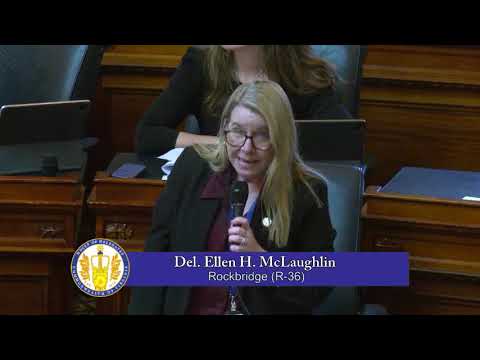
Other gun‑related bills also cleared the House. The chamber approved measures addressing unserialized “ghost”‑gun components, penalties for unlawful transfers, restrictions on firearms in certain facilities, and a statute addressing storage when minors or prohibited persons are present. In floor debate on House Bill 871 — the storage‑in‑residence measure — a delegate from Campbell County warned the bill “has no escape hatch for emergencies” and said its penalties would fall hardest on lower‑income families who cannot afford biometric safes; the measure passed 60‑37.
Supporters of the package argued the bills would close gaps in public‑safety enforcement, protect children and vulnerable people, and create clearer criminal penalties; opponents repeatedly raised constitutional and implementation concerns and predicted litigation.
Beyond firearms policy, the House disposed of a broad set of bills across committees, including votes on utility regulation, housing, education, and public‑safety topics. An uncontested block of third‑reading bills (HB 861, 887, 940, 1039) passed unanimously, 97‑0; other bills failed or were re‑referred as reflected on the roll. For example, a bill to rename the state electric‑utility regulator failed on a 34‑63 vote, while dozens of other bills were adopted after committee substitutes and amendments.
The House also considered bills on the Virginia National Guard’s mobilization authority. Delegate Doug Whit urged caution, saying the measure risked ‘‘destroying’’ the Guard’s readiness; the House approved that bill, 60‑36.
Members closed the morning’s business with a slate of ceremonial introductions and recognitions and agreed to reconvene Feb. 6 at 11 a.m.
Votes at a glance: HB 21 (industry liability) — passed 62‑35; HB 217 (assault firearms/feeding devices) — passed 58‑34; HB 286 (National Guard mobilization) — passed 60‑36; HB 871 (storage where minors present) — passed 60‑37. (All tallies as announced on the floor.)