Get Full Government Meeting Transcripts, Videos, & Alerts Forever!
Get email alerts on the Code Enforcement Roundup topic
No spam. Unsubscribe anytime.
Palm Coast Code Enforcement Board approves city recommendations across long docket; repeat violators face continuing fines
Summary
At its Feb. 4 meeting the Palm Coast Code Enforcement Board approved the city’s recommendations across a packed docket: many first-time or corrected violations were closed with administrative costs, while several repeat violators were ordered to pay continuing fines (one case cited more than $7,000 in accumulated fines). Staff clarified trailer and swale parking rules after residents expressed confusion.
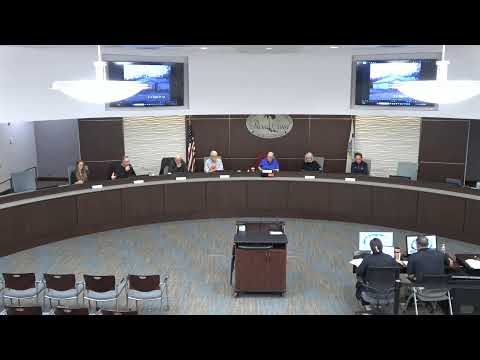
The Palm Coast Code Enforcement Board met Feb. 4 and approved the city’s recommendations on a full docket of property- and vehicle-related cases, from trailer and RV parking to fence maintenance, overgrowth and construction-site stabilization.
The board routinely granted no-fine standing orders with administrative costs in cases where violations were corrected or where respondents showed remedial action. For example, property managers and renters who said they had removed trailers or corrected conditions saw the city’s recommendation for a no-fine order and a $53.50 administrative cost approved.
At the same time, the board imposed or continued significant fines in repeat-violation matters. A building-permit and code-enforcement series for 15 Kaiser Place resulted in continuing fines totaling $7,100 for one case (142 days at $50 per day) and several sister cases remain under continuing fine orders. Multiple land-development cases against Brightland Homes of Florida LLC drew recurring fines and orders to stabilize cleared lots before the next storm season.
Residents who spoke at the meeting raised procedural concerns, especially about parking in swales and limits on time allowed to have trailers at a residence. In one extended exchange, Laura Hannon, a long-time property owner, said she had received repeated notices dating to 2021 and that brief observation windows made compliance difficult: “15 minutes isn’t enough for my husband and I to even shovel mulch off a trailer,” she said.
City staff clarified enforcement rules in several exchanges. Luis Mendez, a city code officer, told the board, “The rule is no trailer. Period,” and explained that recreational vehicles are treated differently (an RV may be allowed for three days for maintenance), while trailers are generally not permitted to be stored in residential driveways. Mendez said inspectors usually observe up to 90 minutes to determine whether a trailer is being actively used before writing a notice.
The board handled multiple sister cases and omnibus-style dockets in sequence. In many swale- and median-parking cases, evidence showed repeated notices and reinspections; where respondents demonstrated correction (for example, removing a borrowed trailer or renting storage), the board approved no-fine orders with administrative costs. Where properties remained in violation or owners did not respond, the board approved continuing fines per staff recommendations.
The board concluded the session shortly after noon and set its next meeting for March 4, 2026.