Get Full Government Meeting Transcripts, Videos, & Alerts Forever!
Get email alerts on the Food Services topic
No spam. Unsubscribe anytime.
Operations committee flags $15,055 shortfall in food services budget; participation and federal reimbursements under scrutiny
Summary
The operations committee reviewed a proposed 2026–27 food services budget projecting a $15,055 deficit, discussed current paid meal prices and participation rates, and took consensus to advance the budget to the full Board for a formal vote.
The Wallingford School District operations committee reviewed a proposed food services budget for 2026–27 that projects $2,809,846 in total revenue against $2,824,901 in expenses, producing a $15,055 shortfall.
Speaker 2, the budget presenter, said the proposal assumes current paid meal prices — elementary breakfast $2.00 and lunch $3.25; middle school breakfast $2.10 and lunch $3.35; high school breakfast $2.25 and lunch $3.45 — and a weighted-average federal reimbursement that last year averaged about $4.01 per meal. "I'm anticipating total revenue of $2,809,846," Speaker 2 said when presenting the line items.
Board members pressed on the assumptions that drive revenue. Speaker 1 said if federal reimbursement levels rise or fall, the district may need to change paid meal prices. "If we're running in a deficit, we will have to come up to the federal standard," Speaker 1 said, noting federal guidance for the coming year had not yet been finalized.
Speakers discussed participation as the principal lever to improve food-service finances. The committee reviewed recent participation figures: Speaker 1 read monthly rates showing roughly 20.3% elementary breakfast participation and 43.8% elementary lunch; middle school breakfast around 7% with lunch near 30.3%; high school breakfast about 7.8% and lunch about 44.8%. Speaker 2 noted December was an outlier month because of higher-than-normal student absences and offered district averages of approximately 13.7% for breakfast and 46.1% for lunch.
Committee members also emphasized how service delivery affects participation. "It's delivered now" for preschool and early elementary, Speaker 2 said; Speaker 6 added that older students must pick up breakfast in the cafeteria, which reduces participation.
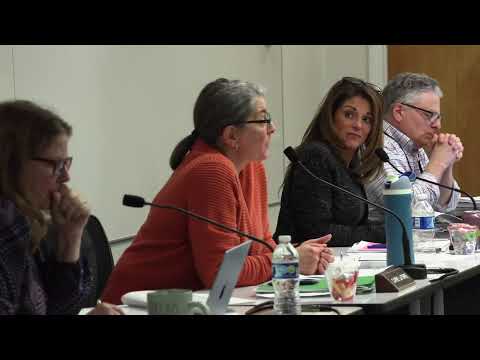
After discussion, Speaker 1 asked for a roll-call consensus to move the proposed food-services budget forward to the full Board of Education for a formal vote. The committee recorded a majority of yes votes and one abstention due to an audio/hearing issue; Speaker 1 said the item will be scheduled for the next board meeting for a formal vote.
Next steps: the operations committee advanced the proposal to the regular Board agenda and urged continued monitoring of participation and federal reimbursement guidance before any local price decisions are finalized.