
Committee advances bill to pause evictions during extreme weather for tenants in assistance programs, 14-12
Get AI-powered insights, summaries, and transcripts
Subscribe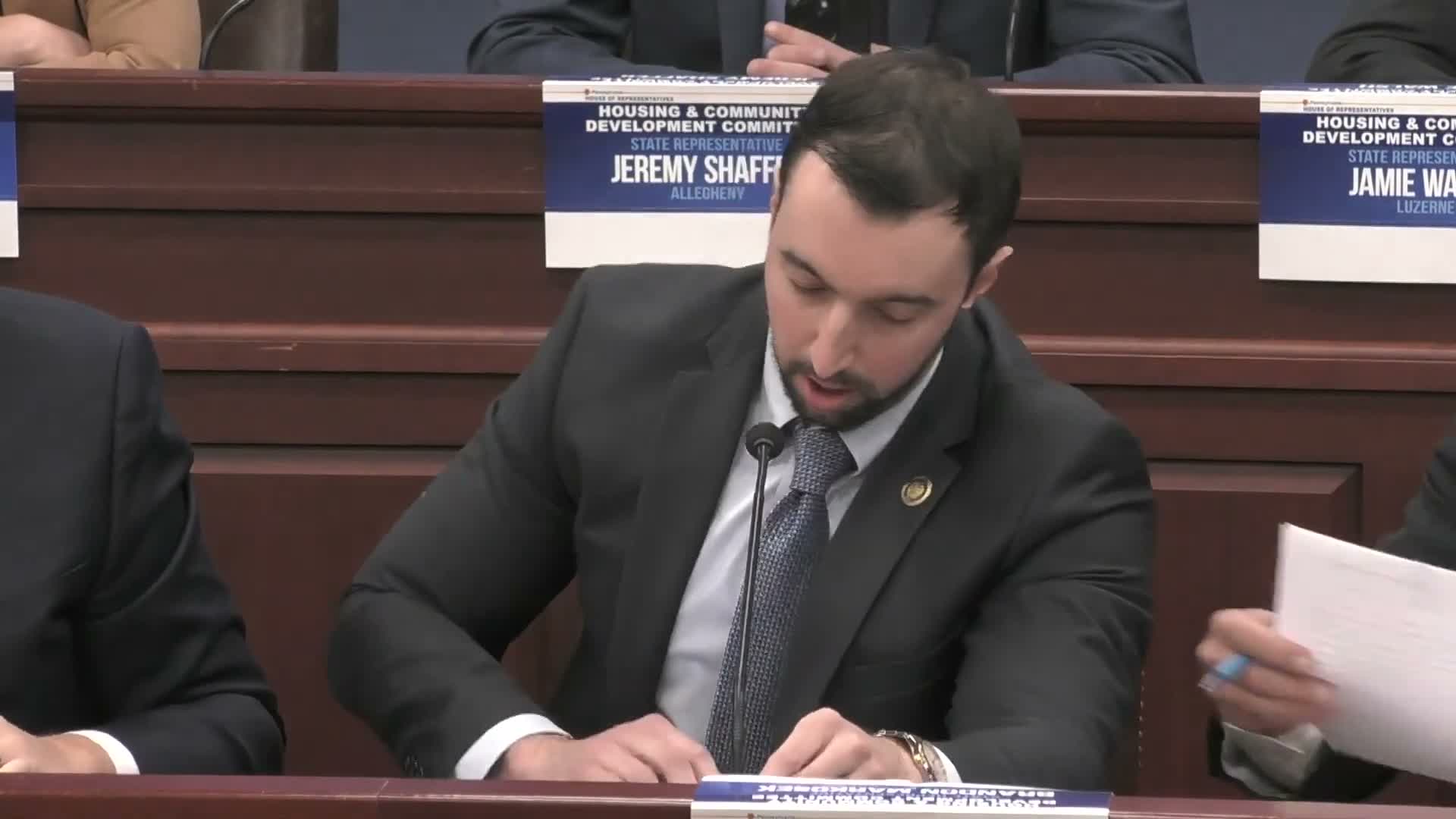
Summary
House Bill 2023 passed the committee 14-12. The bill would require judges to pause eviction executions day-by-day during extreme weather (triggers include temperature below 32°F and National Weather Service warnings) for tenants enrolled in specified assistance programs.
The Housing & Community Development committee advanced House Bill 2023 on a 14-12 vote after members debated implementation and potential unintended consequences.
Representative Scott, sponsor of HB2023, said the bill "would require a judge to pause the execution of an eviction order on a day to day basis during times of extreme weather." He said the pauses would protect "Pennsylvania's most vulnerable tenants" and proposed triggers including when "the temperature drops below 32 degrees," a winter storm or blizzard warning, a hurricane or tropical storm warning, or an excessive heat warning issued by the National Weather Service. Rep. Scott listed affected tenants as those enrolled in programs cited in the record: LIHEAP, Medicare, Medicaid, Social Security disability insurance, SNAP, supplemental security income (SSI), and "special, supplemental nutrition assistance for women, infant, and children."
Committee discussion focused on implementation. The committee chair relayed that he spoke with a local Magisterial District Judge (MDJ) and raised concerns that mandatory pauses could create unintended consequences, such as landlords being less willing to rent to people enrolled in assistance programs and the possibility that a strict 32°F threshold would apply for many days in parts of Pennsylvania. He suggested changing mandatory language to give MDJs more discretion and possibly exempting able-bodied individuals without dependents.
Rep. Scott, who said he is a former MDJ, responded that the bill's use of National Weather Service triggers reduces ad hoc local discretion and that the bill would not stop evictions permanently — it would only delay execution when severe weather is present, often by a day or two to ensure moving logistics and safety.
Following a fast roll, the chair announced HB2023 "passes committee 14 to 12." One member noted that "All Republicans will be no." The bill will proceed toward the House floor; committee debate and proposed wording changes (for example, switching mandatory language to permissive) may be considered before floor action.
For clarity, the transcript lists program names as spoken in committee. "Special, supplemental nutrition assistance for women, infant, and children" refers to the federal Special Supplemental Nutrition Program for Women, Infants, and Children (WIC). The record also uses the abbreviation MDJ for Magisterial District Judge.