Get Full Government Meeting Transcripts, Videos, & Alerts Forever!
Get email alerts on the Polling Locations topic
No spam. Unsubscribe anytime.
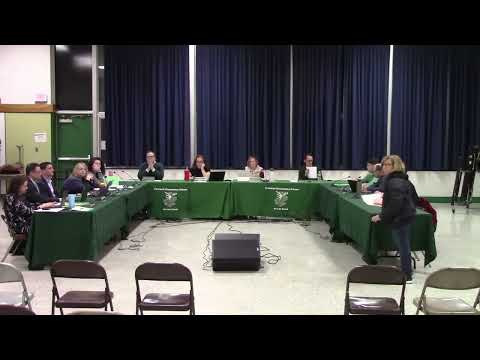
Board debates moving school election polling site as member cites turnout bias
Summary
Board member Christian presented research and local turnout data arguing that the location of polling places alters turnout and representation; the board discussed options — adding a second site, moving to the high school, or a transition period — and asked administration for cost estimates and safety plans.
Board member Christian urged the Cornwall Central School District Board of Education to weigh changes to polling locations for school elections, saying the current single-site system systematically skews turnout.
"The polling location systematically distorts the turnout," Christian said during a presentation of academic studies and local vote counts, arguing that distance differences can produce double-digit percentage drops in turnout for some parts of the district.
The presentation summarized academic findings (including Cantoni and other turnout research) and district-level comparisons showing that some electoral districts that had similar turnout in general elections saw markedly lower participation in school elections when the polling site differed. Christian said those gaps imply that a single site can over-represent voters who live near the polling place and under-represent residents who live farther away.
Former board member Nancy Bridal urged caution about moving the polling site from the middle school to the high school. "Don't fix what's not broken," Bridal said, arguing the middle school provides better security logistics and parking and that multiple locations could increase costs and complicate poll-staffing.
Board members debated three main options: keep the current single site at the middle school, move the single site to the high school, or add a second polling site. Several members said they preferred adding a second site as the fairest short-term fix.
Board members and administrators pressed for concrete cost and logistics data. Questions included whether additional iPads and vote machines would be needed for a second site, whether staffing shortages would increase costs, and how a high‑school location could be secured when school is in session. The administration confirmed there would be incidental costs for additional equipment and staffing and that safety planning would be required for any in-school site.
Several members suggested a transitional approach: try two sites for a year or two before permanently consolidating, coupled with an outreach campaign to raise awareness in lower-turnout neighborhoods. Christian said outreach (signage, targeted communications) helps but will not fully substitute for proximity: the research and the district’s comparisons indicate travel time materially changes turnout.
The board did not take formal action at the meeting. The chair asked administration to return with estimates on the cost and feasibility of a second polling site and, separately, what it would take to move the single site to the high school so the board could vote after receiving that information.
What’s next: Administration will compile cost, security and equipment estimates and report back; the board signaled it will consider a transitional two‑site trial and additional community outreach before deciding on a permanent change.