Get Full Government Meeting Transcripts, Videos, & Alerts Forever!
Get email alerts on the Environmental Protection topic
No spam. Unsubscribe anytime.
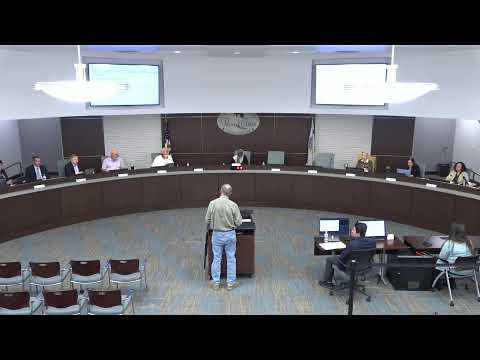
Palm Coast planning board reviews Chapter 10 changes to strengthen wetland, floodplain and cultural protections
Summary
At a Jan. 21 workshop, staff presented proposed amendments to Chapter 10 of the Land Development Code to clarify wetland delineation, require erosion controls and freeboard, protect cultural resources and add wildlife-crossing guidance; no board vote was taken and the package will go to City Council in March.
PALM COAST, Fla. — The City of Palm Coast Planning and Land Development Regulation Board heard a staff workshop on Jan. 21 reviewing proposed amendments to Chapter 10 (environmental and cultural resource protection) of the city’s Land Development Code.
Dylan Rodriguez, the city’s environmental planner, said the changes are intended to implement recent comprehensive-plan updates, clarify regulatory intent, update references to state and federal rules, and address recurring enforcement issues. Rodriguez told the board the rewrite aims for broader protection of wetland corridors as well as clearer, technical standards for delineations and mitigation.
Rodriguez highlighted several substantive changes: wetland delineations must follow the Florida Administrative Code (chapter 62-340) methodology or the pre-Henderson method; wetland delineation reports would be valid for three years unless a formal agency determination applies; and staff replaced the phrase ‘Florida qualified environmental professional’ with ‘qualified environmental professional’ to reflect current local practice. On mitigation, Rodriguez said agency permits from the St. Johns River Water Management District, the U.S. Army Corps of Engineers or the Florida Department of Environmental Protection will serve as prima facie evidence of compliance and that “no net loss of wetland function shall be permitted for each optimal wetland system located in the city.”
The draft would clarify low-impact activities allowed in upland buffers—such as pruning, planting native vegetation, removing exotic species and elevated boardwalks—and prohibit berms that defeat buffer function. To reduce construction-related erosion, staff proposed requiring silt fence or turbidity barriers at least 1 foot landward of upland buffers and a double row of silt fence for especially protected wetlands. A board member requested that the code explicitly require both installing and maintaining silt fencing; staff agreed to add maintenance language.
Floodplain-related updates include explicit site-plan requirements (removing an ambiguous “if necessary” qualifier for flood studies), a two-foot freeboard above established flood elevation, and standards intended to keep new platted lots out of special flood hazard areas. Rodriguez cited the Florida Building Code and ASCE 24 for flood-resistant construction guidance.
The draft also addresses threatened and endangered species. For gopher tortoises staff proposed that property owners relocate individuals on-site or to approved locations and submit an after-action report approved by the Florida Fish and Wildlife Conservation Commission before clearing. On wildlife connectivity, staff recommended that projects fragmenting corridors provide a minimum of one dedicated wildlife crossing, noting an estimated cost of about $2–$3 million per crossing.
The chapter’s cultural-resources provisions would require cultural-resource assessment surveys (CRAS) for properties that meet specified criteria, require that reporting follow Division of Historic Resources guidelines, and accept a SHPO clearance letter when a recent survey found no significant resources. Staff said properties already surveyed within five years that the State Historic Preservation Officer has cleared would not automatically need a new survey; conversely, the city may require additional work at the applicant’s expense if results are unsatisfactory.
During public comment, Preston Zapp, representing several local history groups, urged stronger field-based cultural-resource surveys and said historical resources and wetlands have been harmed during past development; Zapp said he has “found them crushed by bulldozers” when referring to gopher tortoises. He also cited localized runoff problems into Pellicer Creek and urged better oversight of surveys and construction impacts.
Rodriguez told the board staff will present a revised package to City Council, expected in March, and that staff will monitor pending state-legislative actions that could require further edits. The board took no formal vote; the meeting closed after board thanks and a procedural motion to adjourn.
The planning board packet and the proposed Chapter 10 text will be posted by city staff ahead of the City Council hearing, and staff said they will return with any red-line changes prompted by state action or additional public input.